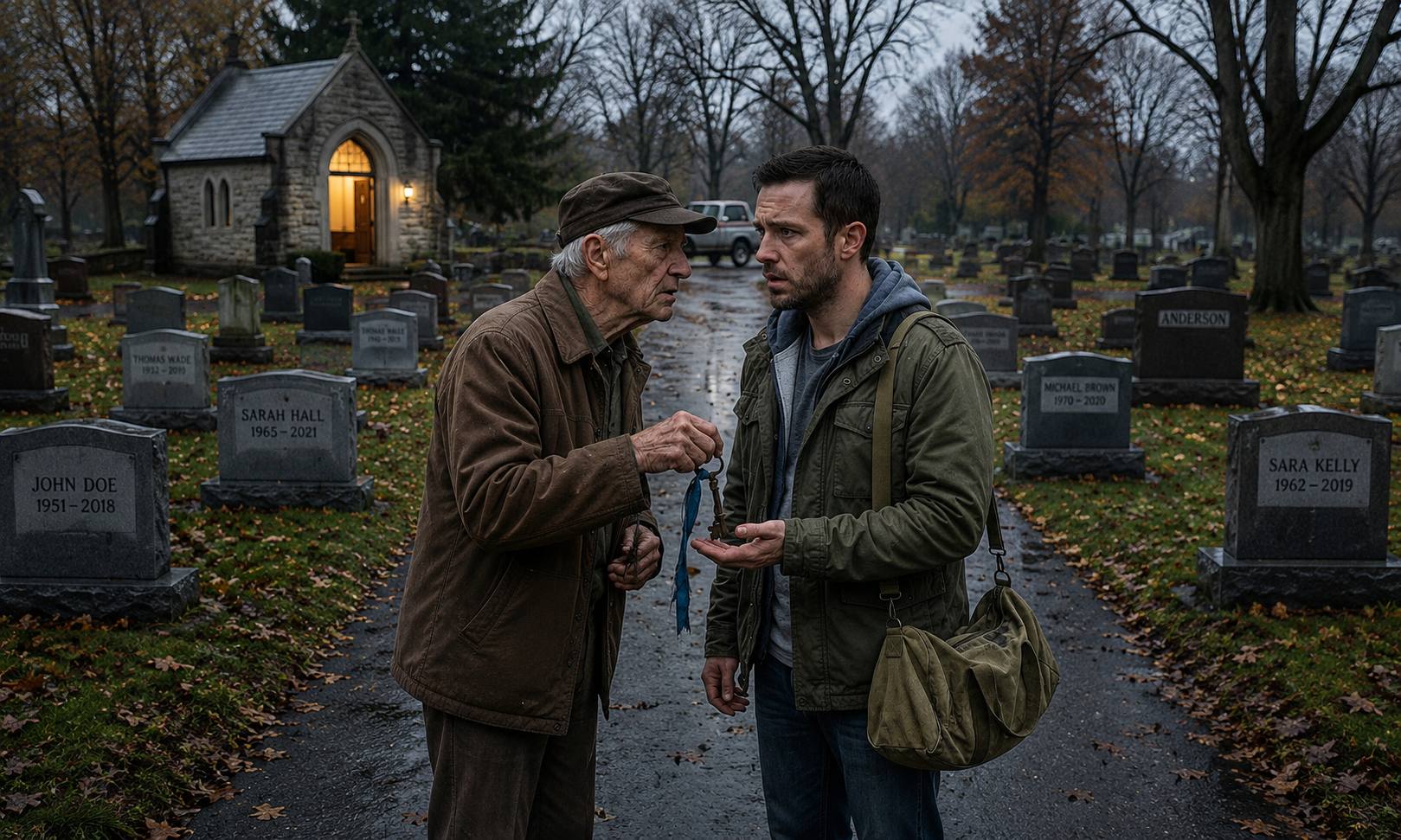
Then I reached the final page of his letter.
Do not confuse possession with repair, he had written.
The house can be returned.
The company can be returned.
Your time cannot.
Before you decide what to take from them, decide what you refuse to become.
I folded the letter and stared at the workshop door.
The key had opened the room, but my father had left the next door closed on purpose.
By morning, the lawyer named in the documents had confirmed that the later will was genuine and that my father had delivered the original himself.
He had also left instructions to release the company records to me if I appeared after my sentence ended.
The lawyer warned me that nothing would happen instantly.
The older will had already been submitted, Vanessa had acted as though she controlled the estate for a year, and my conviction gave her an argument she would use against every document I produced.
“She’ll say your father was confused,” the lawyer told me.
“She’ll say you fabricated the records after you got out, and she’ll remind everyone that a jury convicted you.”
“She already did all three before I left the porch.”
That afternoon, the lawyer requested a temporary order preventing the house, the company property, or the remaining estate assets from being sold until the competing wills could be reviewed.
The order did not declare me the owner.
It simply stopped Vanessa from turning disputed property into cash before anyone could examine the evidence.
It was enough to force her to call me.
Her voice was calm when I answered, but I could hear drawers opening in the background.
“You have no idea what you’re doing,” she said.
“I know Dad signed another will.”
A pause followed, brief but real.
Then Vanessa laughed.
“Your father signed dozens of things near the end.”
“Did he also leave dozens of original security logs?”
This time, I heard Damien in the room with her.
He said something too low for me to understand.
Vanessa covered the phone and snapped at him before returning to me.
“You were convicted because you were guilty, Daniel, and no collection of old papers will change what you are.”
I looked at my father’s letter on the workbench.
“I’ll be at the house tomorrow morning with the lawyer.”
“You are not coming into my house.”
“That is one of the questions we need answered.”
When I arrived, Vanessa was no longer wearing my father’s robe.
She had changed into a dark dress and arranged the dining room table as though she were hosting a business meeting.
The framed photograph in the hallway was still facedown.
Damien stood near the staircase wearing my father’s watch again, but he did not laugh when he saw me.
Two moving boxes sat beside the study door.
Vanessa claimed they contained personal clothing.
The lawyer asked her not to remove anything until an inventory could be completed.
She folded her hands and gave him the smile she used whenever she wanted cruelty to look reasonable.
“Surely you understand why I’m uncomfortable,” she said. “A convicted thief has appeared with a key and a stack of documents, claiming he owns my home.”
I placed the later will on the table but kept the ledger in my bag.
Vanessa glanced at the signature page and immediately said my father had not been mentally capable of making changes.
The lawyer asked whether she had any medical finding supporting that claim.
She did not.
Instead, she turned to Damien.
“Tell them how confused he was.”
Damien’s eyes stayed on the table.
Vanessa repeated his name.
He finally said Dad had been forgetful during the final months of his life.
I asked one question.
“If he was too confused to sign a will, why did you continue using his signature authority at the company until three weeks before he died?”
Damien’s head lifted.
Vanessa’s fingers tightened around each other.
She accused me of inventing the claim, so I removed one copied payment approval from the envelope and slid it across the table.
The approval carried my father’s name, but the timestamp matched a night the caretaker had recorded him sitting at Evergreen Cemetery with the blue notebook.
The caretaker’s observation did not prove who had approved the payment.
It proved my father had not been at his desk when someone used his authority.
Vanessa pushed the paper back without reading the second page.
“He gave me permission to handle company matters.”
The sentence changed the room.
Until then, her position had been that no one had accessed the office improperly and that the records against me were legitimate.
Now she was admitting she had used my father’s authority outside his presence.
Damien looked at her as though she had stepped away from him without warning.
“You said we were denying that,” he muttered.
Vanessa turned on him immediately.
“I said you were supposed to explain the technical side.”
The lawyer told both of them to stop discussing matters that could affect the review.
Neither listened.
Damien accused Vanessa of leaving him responsible for the computer records while she controlled the approvals.
Vanessa replied that Damien had created the false vendors and moved the money into accounts tied to his failed business investments.
Their argument did not give me a complete confession, but it destroyed the story they had maintained for three years.
Each was now admitting that the other had manipulated the same records used to convict me.
Vanessa realized it before Damien did.
She stood and ordered everyone out.
The lawyer reminded her that the preservation order included company files stored in the house.
She threatened to call the police.
I picked up my documents and stepped away from the table.
Three years earlier, I might have stayed and shouted until my anger gave her the scene she wanted.
This time, I left before she could turn my reaction into another piece of evidence.
Damien followed me onto the porch.
Rainwater from the night before still darkened the edges of the driveway.
He looked smaller without Vanessa beside him.
“I never thought you’d go to prison,” he said.
“That doesn’t make it better.”
“I thought Dad would fix it.”
“He tried.”
Damien touched the watch on his wrist.
He admitted that the false invoices had begun as a way to cover losses from a business deal Vanessa had encouraged him to make.
When the shortage grew too large, she used my audit questions to cast me as the person moving the money.
Damien had supplied my old login information and reactivated my account.
Vanessa had controlled the approval token and pressured employees to describe routine access as suspicious behavior.