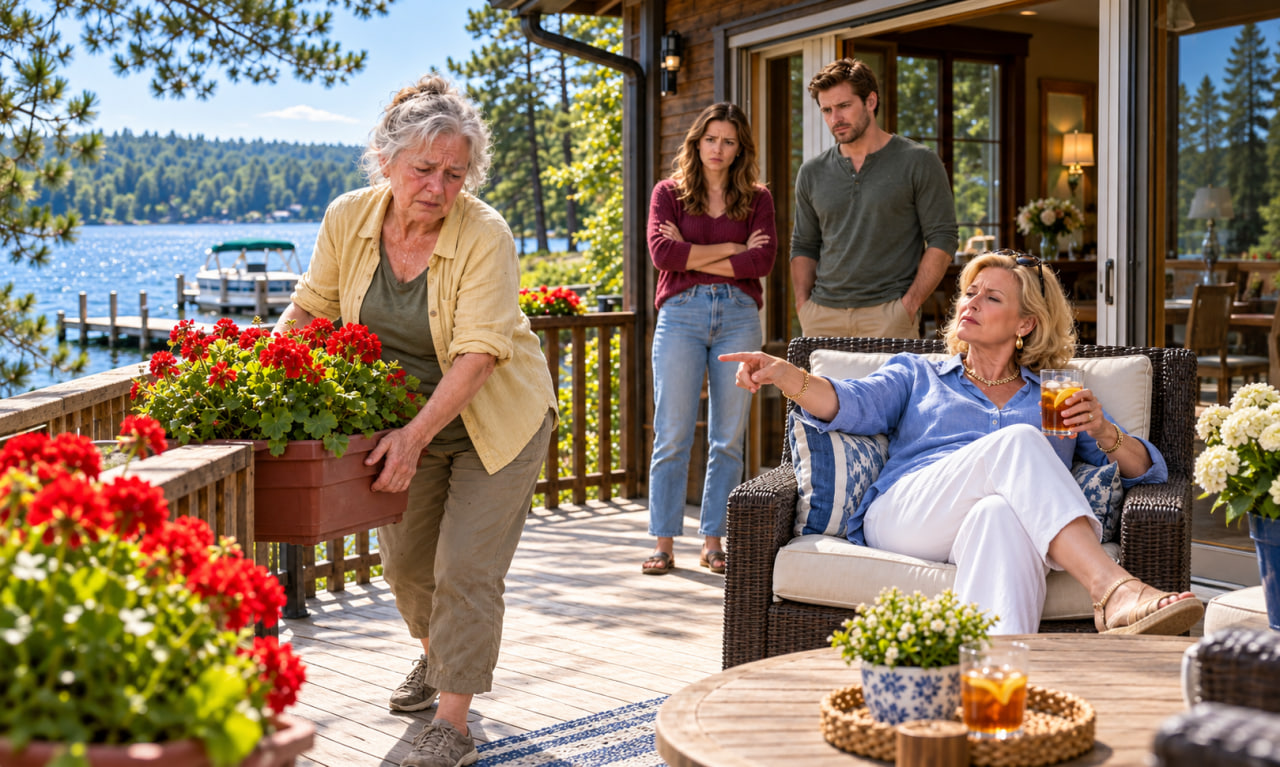
Mom remembered saying “maybe sometime” when Susan mentioned friends who would love the lake. She’d never agreed to host six additional people. I offered to telephone Susan, but Maggie stopped me before I could finish my sentence.
“I’ll handle this myself. It’s my house, after all.”
She called back thirty minutes later. Susan had insisted she’d already promised the trip, and that canceling would make her look foolish. Maggie told her that making plans without the owner’s permission was the real mistake, and that Carol needed to be informed immediately.
“She said I’ve changed,” Mom told me.
“What did you say?”
“I told her I hoped so.”
I could hear the pride in her voice. Then she explained that Susan had asked to visit privately, without Daniel or me present. Maggie agreed because she wanted to speak for herself rather than hide behind her daughter and son-in-law.
The next afternoon, Susan arrived carrying a blue hydrangea in a pot. According to Mom, the visit began awkwardly. Susan apologized that things had gotten out of hand, and Maggie gently told her she needed an apology for the behavior, not just its consequences.
Susan became defensive, then unexpectedly began crying. She confessed that being waited on made her feel important, and that when people stopped doing things for her, she interpreted it as rejection. Maggie listened but explained that her feelings couldn’t determine everyone else’s behavior.
“I liked being taken care of,” Susan admitted. “And I got used to it. I didn’t notice how much I was asking.”
Maggie acknowledged her own habit of smiling while feeling overwhelmed. She explained that she’d been afraid to disappoint people, and that she intended to begin saying no before resentment built. Susan apologized for the flowers, the spare key, and the unapproved guests.
The apology didn’t instantly erase everything. Mom still wanted Labor Day to herself, so she declined Susan’s request to stay that weekend. Instead, she invited her for lunch in October and suggested bringing dessert.
When Maggie told us, Daniel looked close to tears. He’d wanted his mother to recognize other people’s needs for years, and hearing that she’d taken even a small step mattered enormously. He thanked Maggie for giving Susan a chance without surrendering her boundaries.
October arrived with cooler mornings and bright leaves along the water. Susan came for lunch carrying an apple cake, knocked at the door, and asked whether she could come inside. They ate soup, discussed what had happened, and disagreed about several things without ending the visit.
Susan brought her own bowl to the sink afterward. Maggie noticed, but didn’t congratulate her; responsible adults shouldn’t need applause for ordinary chores. Before leaving, Susan admired the hydrangea Maggie had planted beside the deck and thanked her for keeping it.
Over winter, the relationships repaired slowly. Richard practiced expressing his preferences instead of automatically agreeing. Daniel stopped apologizing for every difficult feeling his mother experienced, while Maggie learned to invite visitors only when she genuinely wanted company.
Nobody became perfect. Susan could still be demanding, and Mom occasionally slipped into old habits. But now people noticed when the balance became unfair, and they spoke before another entire season disappeared into frustration.
The following spring, Maggie invited us all for the first weekend in June. Her message was simple: bring your own sheets, contribute food, and come ready to enjoy the lake. Susan immediately asked what she should bring, and Mom assigned her Sunday breakfast.
When Daniel and I arrived, the red geraniums were back on the railing. The hydrangea beside the steps was producing fresh leaves, and Maggie was gardening in an old straw hat. She looked genuinely delighted to see us without seeming anxious about everything she had to prepare.
Susan and Richard arrived an hour later with groceries. Susan glanced at the flower boxes and smiled, telling Maggie they looked lovely. Then she carried her suitcase upstairs, returned, and asked whether she could help prepare dinner.
Mom handed her onions to chop. Susan complained that onions made her eyes water, but she did the work anyway. When I laughed, she raised an eyebrow and announced that personal growth apparently involved unpleasant vegetables.
That evening, everyone shared the cooking and cleanup. Daniel burned some corn, Richard overcooked a piece of fish, and Maggie laughed until her cheeks hurt. Nothing was perfect, but no one was expected to disappear into the kitchen while the others enjoyed themselves.
After dinner, Susan found me near the dock. She apologized for blaming me and telling relatives I’d turned Daniel against her. I thanked her for saying it, without pretending the previous summer had been acceptable, and admitted that I should have addressed my concerns sooner.
“I might still get things wrong,” Susan said.
“Then we’ll talk about them,” I replied. “Preferably before Mom starts shopping for another house.”
She winced, understanding exactly what I meant. We stood quietly for a moment, then walked back together, not as instant best friends but as two people willing to make the next gathering better than the last.
Sunday morning, I woke to the smell of pancakes and hurried downstairs, afraid Maggie had resumed her exhausting old routine. Instead, Susan stood at the stove, Richard sliced fruit, and Daniel set the table. Mom was nowhere in sight.
I found her asleep on the lounger outside, a blanket over her knees and a book resting on her lap. Red geraniums stood between her and the lake, exactly where she wanted them. For once, nobody had woken her to ask about breakfast.
Susan stepped onto the deck with a coffee mug and noticed a flower branch partially blocking the water. She reached toward it, paused, then withdrew her hand. I watched her smile faintly before she whispered that it looked fine just where it was.
Mom opened one eye and asked whether breakfast was ready. Susan told her there was no hurry, and Maggie settled back beneath her blanket. Inside, Daniel dropped a plate and Richard complained about burning pancakes, but nobody asked her to fix anything.
A year earlier, I’d imagined justice as watching Susan lose her privileges. Standing there beside the lake, I realized that the real victory was much quieter: my mother could finally rest in the home she’d almost sold to escape everyone else’s demands.
Her flowers remained on the railing. Her guests were preparing their own breakfast. And Maggie, the rightful owner of that beautiful little cabin, was enjoying the view without asking anybody’s permission.
For once, breakfast could wait.