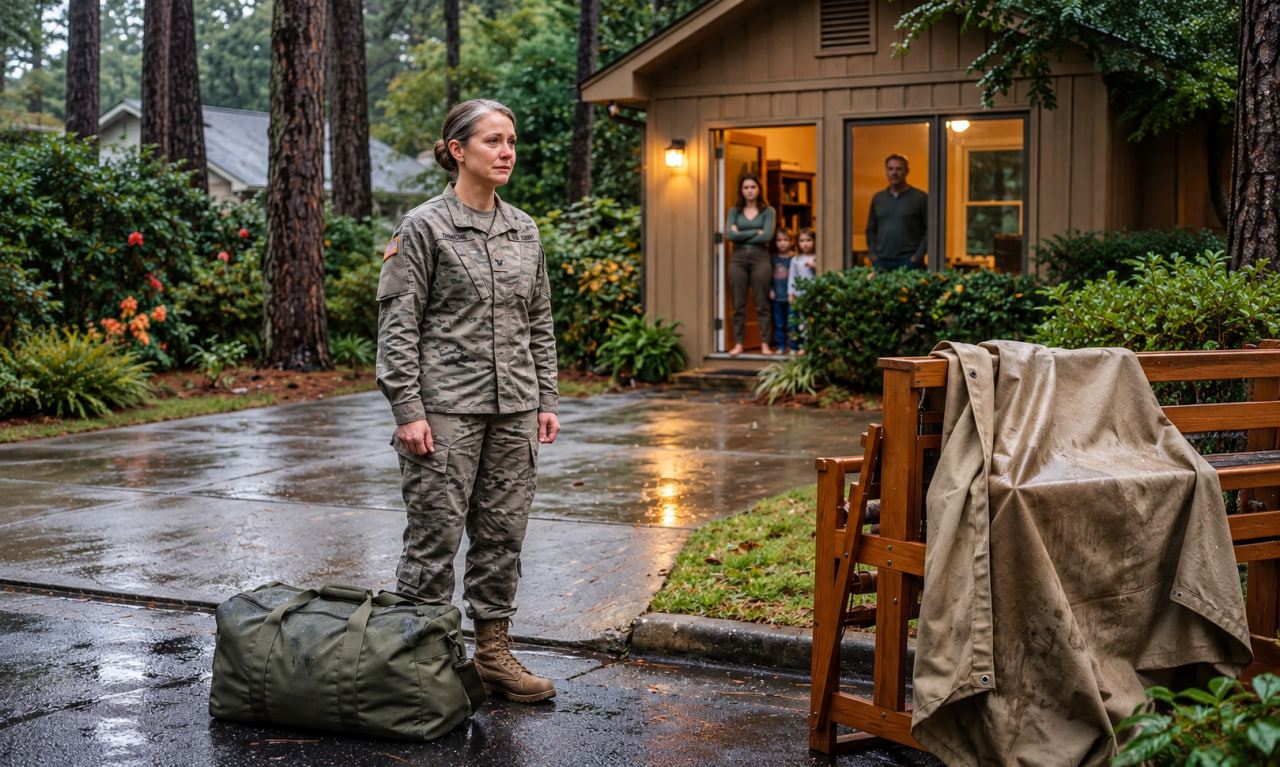
Twice each week, Michael and I met for dinner or walked beside the river. Sometimes we discussed therapy, finances, or Kelsey.
Other evenings, we talked about books, work, and ordinary things.
He never attempted to rush the process.
When he came to the house, he knocked. If I invited him inside, he left at the time we had agreed.
One evening, three months after our separation began, I sent him a temporary door code and invited him to dinner.
He arrived carrying flowers and stopped on the porch.
“May I come in?”
The question should have been ordinary.
After everything that happened, it felt enormous.
“Yes.”
We cooked together. He asked before opening cabinets and did not comment on how carefully I watched him.
After dinner, he washed the dishes and prepared to leave.
He did not ask whether the temporary code would continue working.
Before walking out, he placed a small wooden box on the kitchen table.
Inside was the restored shuttle from my mother’s loom. The walnut had been cleaned, but the tiny scratch she made with her wedding ring remained.
Beneath it was a handwritten note:
Nothing returns to this house without your permission—including me.
Part 5: The Room Everyone Learned to Enter
Michael did not move home because of the note.
A meaningful sentence could begin change, but it could not prove it.
For three more months, he continued therapy, repaid the renovation fund, and respected every boundary even when no one was watching.
Only then did I invite him to discuss returning.
We created our agreement together. It was not a list of punishments. It was a description of the marriage we should have built from the beginning.
Michael would remain Kelsey’s father. He could help his grandchildren, celebrate their birthdays, and respond to genuine emergencies.
But help would be transparent, limited, and never funded with deception.
When I finally placed a new house key in his hand, he did not immediately attach it to his key ring.
“Are you certain?”
“Yes.”
“Then thank you for choosing this. I know it isn’t something I was automatically owed.”
He returned home six months after leaving.
Kelsey continued living in her apartment. She paid a small amount toward the debt each month and did not ask to use the studio for storage.
The children visited only when invited.
The garden studio reopened at the beginning of autumn.
My mother’s restored loom stood near the windows, surrounded by shelves of fabric and thread. The repaired front beam remained slightly darker where the new wood joined the old.
I chose not to hide the seam.
Once a month, I opened the studio for a small textile workshop serving military spouses, teenagers, and families adjusting to long separations.
We did not talk much about therapy. We simply made things with our hands and allowed silence to be useful.
By Thanksgiving, the house felt like mine again.
It also felt like ours—but in a way that had been chosen rather than assumed.
Kelsey arrived at two in the afternoon carrying a sweet-potato casserole.
No suitcases.
No boxes.
No expectation that being family allowed her to claim space.
Noah hugged me first. Mia followed, holding a small bundle of yarn she had chosen herself.
After dinner, she ran toward the garden and stopped outside the studio door.
Through the window, the loom stood in the warm afternoon light.
Mia placed one hand against the glass but did not enter.
“Grandma Rachel?”
“Yes?”
“May I come in?”
I looked at Michael.
Months earlier, he would have answered for me or opened the door himself. Now he stayed where he was.
The decision belonged to me.
I unlocked the studio.
“Yes,” I said. “Come in with me.”
Mia took my hand.
Inside, she stared at the loom with solemn curiosity.
“Is this the thing that got wet?”
“It is.”
“Is it fixed?”
I ran my fingers across the repaired beam.
“It works again. But you can still see where it was damaged.”
She considered that.
“Maybe it remembers.”
“Maybe it does.”
I showed her how to touch the wood gently and how the shuttle moved between the threads. Noah watched from the doorway until I invited him inside.
Michael remained outside.
“Are you coming?” I asked.
He looked at the threshold.
“Only if you want me to.”
I held out my hand.
He stepped inside.
Later, while everyone cleared the Thanksgiving dishes, I returned to the studio alone. A narrow strip of fabric remained stretched across the loom—the first piece I had woven since its restoration.
Some threads were pale gold. Others were blue, gray, and deep green. None could create the pattern alone.
My mother had been right.
Strength did not come from one thread overpowering the others. It came from each thread holding its place without tearing the rest apart.
For years, I believed protecting a home meant being strong enough to lock every door.
I understood differently now.
A healthy home did not have to remain closed.
It simply required people who knew how to knock, ask permission, and respect the answer.