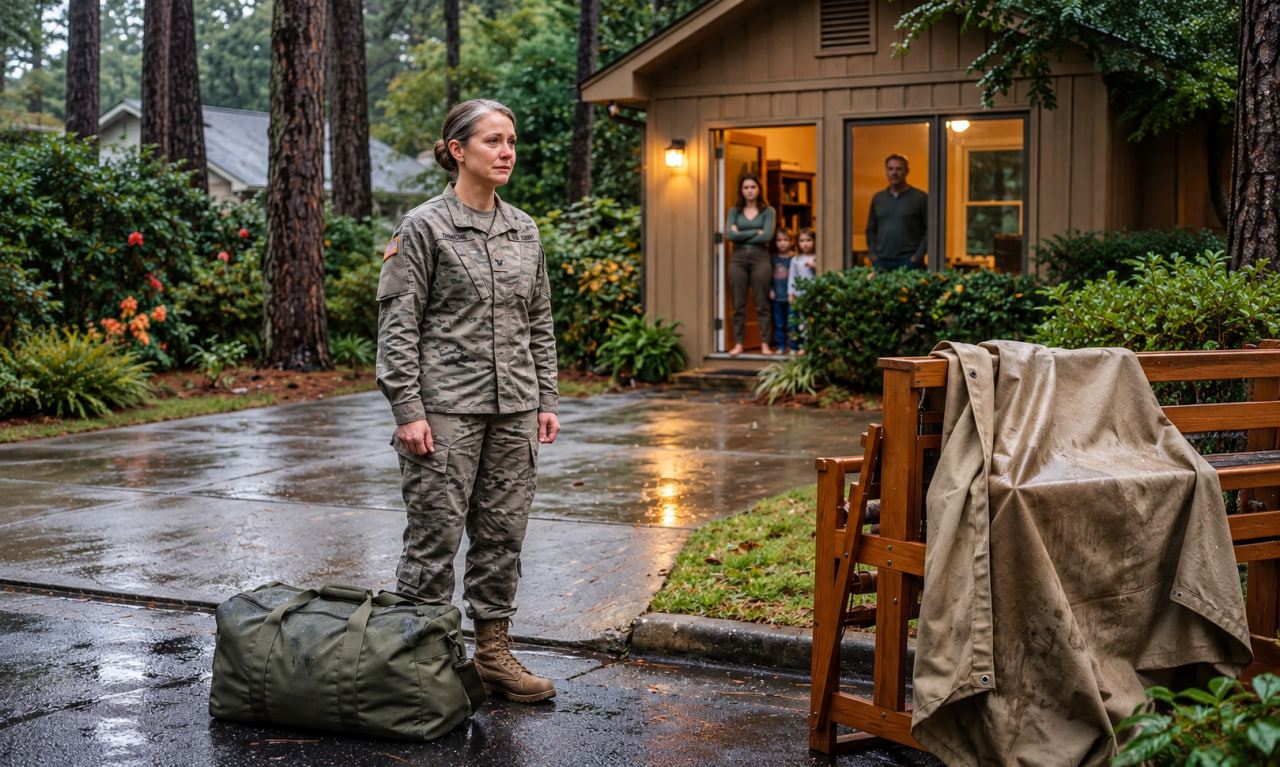
“Being strong does not make me the shock absorber for everyone else’s choices.”
He closed his eyes.
“I know.”
“You know now because your plan failed.”
That afternoon, Kelsey asked to speak with me without Michael.
We met in the hotel lobby while Noah and Mia colored at a nearby table.
She admitted that two days before moving, she realized I had never agreed. She considered stopping but had already told the children the studio would become their new home.
“I thought once you saw them there, you’d let us stay.”
“You used your children to make saying no feel cruel.”
Tears filled her eyes.
“Yes.”
It was the first honest answer she had given me.
“Your father lied to both of us. But after you learned the truth, you made your own decision.”
“I know.”
I looked toward Noah helping Mia choose a crayon.
“They are not responsible for this. Do not tell them I took their home. The studio was never legally or safely their home.”
Kelsey nodded.
She had accepted a temporary administrative job and submitted applications for two modest apartments. She also agreed to sell the remaining equipment from her failed business rather than store it at my property.
Michael moved into a furnished apartment near his office.
He began grief therapy and financial counseling. He signed a repayment agreement covering the $36,400 and gave Diane access to the relevant accounts.
I returned to my house alone.
The first evening, I stood inside the garden studio surrounded by empty spaces where my belongings had been. The room smelled of damp wood and children’s shampoo.
I could still see where Noah’s drawings had been taped to the wall.
Anger would have been easier if I did not love them.
A restoration specialist removed the loom for evaluation. The front beam could be repaired, but the moisture had warped several smaller pieces.
For the first time since I found it in the rain, I allowed myself to cry.
Six weeks passed.
Michael never entered the property without permission. He attended therapy, made the first repayment, and stopped paying Kelsey’s expenses beyond the transparent amount we agreed would help the children during her transition.
Then he asked to meet.
At the same riverside café, he told me he wanted to come home.
I placed an envelope in front of him.
His face went pale.
“Are these divorce papers?”
“The first page is a separation agreement.”
He opened it slowly.
Behind it was a second document titled:
Conditions Required Before Rebuilding This Marriage.
Part 4: The Door I Wasn’t Ready to Open
Michael read every line.
Full financial disclosure.
No hidden support affecting shared plans.
No promises involving my property.
No overnight guests without mutual consent.
No using children, grief, or family emergencies to force decisions.
No key to the house until I chose to return one.
He reached the final page and set the papers down.
“How long?”
“There is no schedule.”
“What if I do everything and you still can’t trust me?”
“Then doing the right thing will still have been necessary.”
He nodded slowly.
There was no argument, no accusation that I was behaving like a commander, and no request that I understand his intentions.
Instead, he asked:
“What do you need that I’ve never asked about?”
The question unsettled me more than another apology would have.
I looked through the café window toward the river.
“I needed you to understand that my compassion belonged to me. You planned around it as though it were a weakness you could use.”
He lowered his eyes.
“I thought once the children were there, you would say yes.”
“That is not consent. It is surrender under pressure.”
“I know.”
“I also needed a husband—not another person who believed I could carry whatever he refused to face.”
He signed the separation agreement.
Over the next three months, Michael’s behavior changed in small, unremarkable ways.
Those changes mattered more than dramatic promises.
He made every repayment on schedule. When Kelsey asked for money beyond the agreed amount, he helped her review alternatives instead of reaching for his wallet.
Kelsey moved into a two-bedroom apartment within her budget. It was smaller than her previous home, but Noah had a desk by the window, and Mia chose yellow curtains.
Kelsey sold her warehouse inventory and placed part of the proceeds toward the debt.
One afternoon, she came to my office at Fort Liberty carrying a folder.
She had documented each item removed from the studio and included receipts for replacing what had been damaged.
“I’m sorry about your mother’s loom,” she said.
She did not call it old furniture.
She did not call the studio a hobby room.
“I knew it mattered, and I moved it anyway because I wanted the space.”
“Thank you for saying that clearly.”
“Will you ever forgive me?”
“Possibly. But forgiveness isn’t the same as giving you access again.”
She nodded.
“I understand.”
The loom restoration took nearly four months. The specialist replaced two warped supports, repaired the cracked front beam, and preserved the marks left by my mother’s hands.
Michael offered to pay.
This time, he asked first.
I agreed that his repayment could cover the damage caused by the unauthorized move, but I selected the specialist and approved every step.