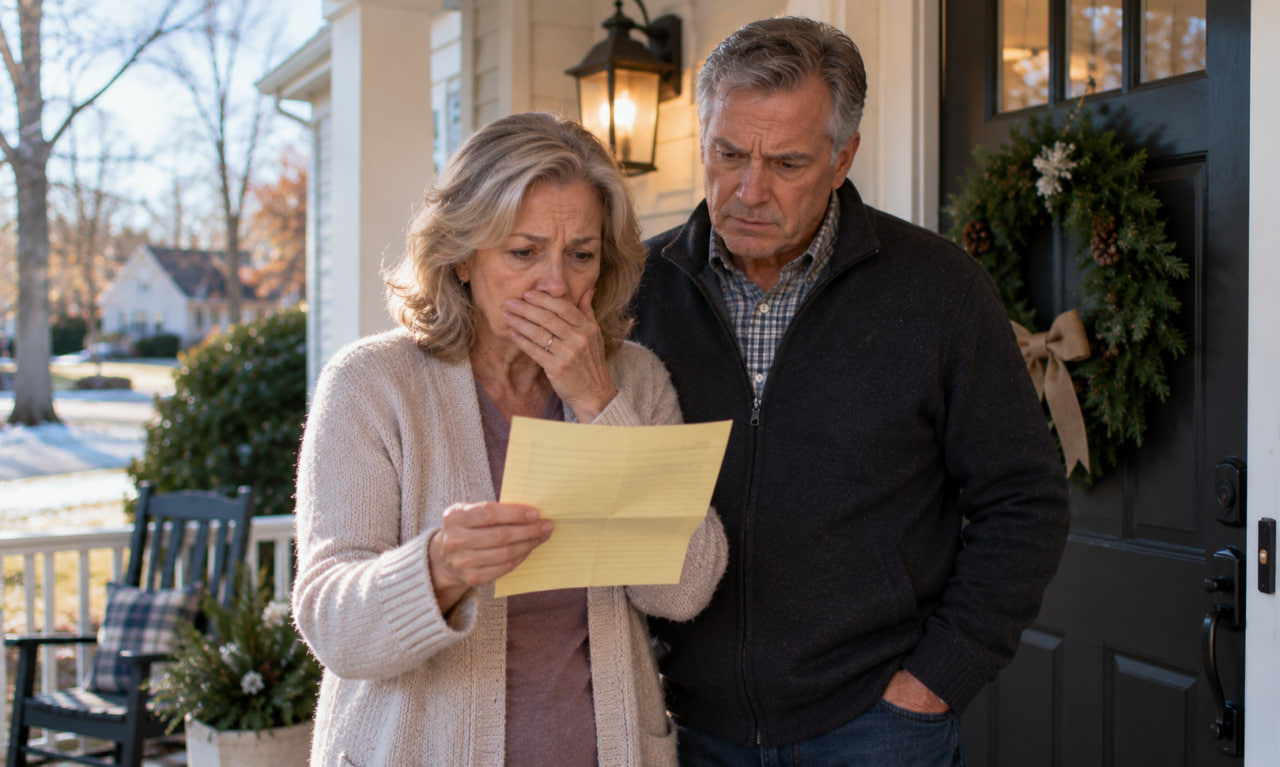
The signature had been copied from one of my legitimate documents.
The notary stamp belonged to a real notary.
But the notary later admitted that she had never witnessed my signature.
Someone had submitted paperwork electronically.
The more we uncovered, the worse it became.
Craig had been drowning financially for almost two years.
The agency had lost major clients.
Payroll expenses had increased.
He had taken loans from private investors.
He had used credit cards.
He had borrowed from one account to cover another.
And then he had started transferring money into his personal account.
Some of it went toward the mortgage.
Some went toward business debts.
Some went toward luxury purchases Emily knew nothing about.
And some went to a woman named Rachel.
Emily recognized the name.
“Who is Rachel?”
Nobody answered.
I looked at the records.
The transfers were regular.
Thousands of dollars at a time.
Colleen looked at Emily.
“You need to be prepared.”
“For what?”
“Your husband may have been hiding more than debt.”
Emily’s face went white.
But before she could respond, the front door opened.
Craig walked in.
He stopped when he saw all of us.
His eyes went directly to the papers.
Then to Colleen.
Then to me.
“What is this?”
I didn’t answer.
He looked at Emily.
“What did you do?”
Emily stood.
“I found the documents.”
His face changed.
“Which documents?”
“The ones with Dad’s forged signature.”
Silence.
Craig looked at me.
“I can explain.”
I nodded.
“Then explain.”
He opened his mouth.
Nothing came out.
“Who forged my signature?”
He looked away.
“Craig.”
“I didn’t do it.”
“Who did?”
“I don’t know.”
Colleen stood.
“You should not say anything further without counsel.”
Craig laughed bitterly.
“Of course.”
He looked at me.
“You think I wanted this?”
“No.”
“You think I planned all of this?”
“I don’t know what you planned.”
His eyes filled with tears.
“I was trying to keep everyone together.”
Emily stared at him.
“By stealing from my father?”
“I didn’t steal.”
“You put his property up as collateral.”
“I was going to pay it back.”
“You forged his signature.”
“I didn’t forge it.”
“Then who did?”
Craig couldn’t answer.
And that silence was answer enough.
The investigation moved quickly after that.
Craig hired an attorney.
The lender suspended the loan.
The police became involved.
Marcus Bell was questioned.
Eventually, the truth emerged.
Marcus had arranged the private financing.
Craig had told him my property could be used as security.
Marcus had assumed Craig had authorization.
When Craig couldn’t produce the original power of attorney, Marcus had pushed him.
Craig panicked.
He obtained the forged document.
He used it.
He never expected anyone to look closely.
But someone finally did.
And that was the thing about lies.
They can survive for years when everyone is afraid to ask questions.
They rarely survive once people stop being afraid.
Craig was charged.
The exact legal consequences took months.
The fraudulent loan was eventually voided because the lender’s documentation could not establish that I had authorized it.
My property was protected.
But Craig’s business was not.
It collapsed.
His agency closed.
Several employees lost their jobs.
Marcus pursued his own claims.
Emily filed for divorce.
That part broke my heart.
Not because Craig was leaving.
Because my daughter had believed for eight years that she knew the man she married.
She didn’t.
But she slowly learned something else.
She knew herself.
And she was stronger than she thought.
For months, Emily lived with us.
Not because we wanted to control her.
Because she needed somewhere safe to rebuild.
The children came too.
The first night Lily walked into our house, she looked around.
“Grandma?”
Diane knelt down.
“Yes, sweetheart?”
“Are we allowed to stay?”
Diane started crying.
She hugged her.
“You never needed permission.”
Noah ran straight toward me.
“Grandpa!”
I caught him.
He wrapped his arms around my neck.
“Where were you?”
I closed my eyes.
“Right here.”
He pulled back.
“Why couldn’t we come over?”
I looked at Emily.
She shook her head.
“Don’t tell him anything yet.”
So I smiled.
“Sometimes grown-ups make things complicated.”
Noah thought about that.
Then he asked:
“Can we play the fire station game?”
I laughed.
“Absolutely.”
That night, I found the old red Lego piece on the dining-room table.
I had left it there for nine days.
I picked it up.
Then I put it back down.
Some things don’t need fixing.
They just need time.
Months passed.
The divorce became final.
Craig was required to repay what he could and accept responsibility for the fraudulent documents.
He eventually wrote me a letter.
It was eight pages long.
I read it once.
He apologized.
He said he had been ashamed.
He said he had convinced himself that he was protecting his family.
He admitted that the first lie had been small.
Then the next one had been easier.
Then the next.
Until he couldn’t remember where the truth ended and the lies began.
At the bottom of the letter, he wrote:
“I thought your money was the thing holding my family together. I finally understand that it was the thing I was using to avoid admitting I couldn’t hold it together myself.”
I didn’t respond immediately.
Months later, I wrote back.
Only four sentences.
“I hope you rebuild your life.
I hope you become someone your children can respect.
But forgiveness does not mean access.
I wish you well.”
Then I closed the envelope.
I never saw him again.
Emily eventually bought a smaller home.
She got a job managing operations for a growing company.
She didn’t ask me to co-sign.
She didn’t ask me for a loan.
When she found the perfect house, she called me.
“Dad?”
“Yeah?”
“I want to do this myself.”
I smiled.
“Then do it.”
“What if I need help?”
“Then ask.”
She laughed.
“That sounds dangerously reasonable.”
“I’ve been practicing.”
She bought the house.
A modest place.
Three bedrooms.
A small backyard.
A porch.
Enough room for Lily and Noah to grow.
Diane and I helped with one thing.
We bought a dining-room table.
Nothing expensive.
Just a solid wooden table.
When we delivered it, Emily stood there looking at it.
“Dad.”
“What?”
“Why a table?”
I shrugged.
“Because families should have somewhere to sit down and tell each other the truth.”
She hugged me.
Years later, Lily went to college.
The education trust covered exactly what it was designed to cover.
Tuition.
Books.
Necessary expenses.
No secret checks.
No financial rescue missions.
No strings.
No leverage.
Just a promise kept.
Noah became obsessed with engineering.
He once spent an entire Saturday taking apart an old radio because he wanted to know how it worked.
Diane complained that he was going to destroy it.
I told her:
“That’s how you learn.”
She rolled her eyes.
“You’re encouraging him.”
“Of course.”
Lily laughed.
“Grandpa, you’re impossible.”
“That’s what grandmothers say when grandfathers are right.”
Diane threw a napkin at me.
And for the first time in years, the house was full of laughter again.
One Sunday morning, nearly three years after the yellow note appeared beneath our storm door, I found another piece of paper there.
My heart skipped.
I picked it up.
This time, the handwriting was unmistakable.
Lily’s.
I unfolded it.
“Grandpa,
Can we come over today?
Grandma promised pancakes.
Love,
Lily.”
I laughed so hard Diane came running.
“What happened?”
I handed her the note.
She read it.
Then she cried.
“Why are you crying?”
“Because she asked.”
“She doesn’t need to ask.”
“I know.”
Diane hugged me.
Then we opened the door.
A car was already pulling into the driveway.
Emily stepped out.
Noah jumped out behind her.
Lily followed.
They ran toward us.
And for a moment, I stood there watching them.
My daughter.
My grandchildren.
My wife.
The house.
The land.
Everything I had spent decades building.
And I realized something I hadn’t understood when I first saw that yellow note.
Money can build walls.
Money can buy houses.
Money can protect futures.
But money cannot build trust.
Only truth can do that.
I had spent most of my life believing that if something was valuable, I needed to protect it.
My property.
My savings.
My contracts.
My family.
But I finally understood the difference between protecting people and carrying them.
I could protect my grandchildren’s future without financing their parents’ mistakes.
I could love my daughter without solving every problem for her.
I could forgive Craig without inviting him back into my life.
And I could step away from a relationship without abandoning the person inside it.
That was the lesson the yellow note had given me.
Not that I should stop loving.
But that love without boundaries eventually becomes another kind of damage.
That evening, after everyone had gone home, Diane and I sat on the porch.
The sun was setting over the property.
The same ten acres someone had tried to steal from me.
The same land my father had once walked across beside me.
Diane rested her head on my shoulder.
“Do you ever wish we’d handled things differently?”
I thought about it.
“Yes.”
She looked up.
“What would you change?”
“I would have asked harder questions sooner.”
She nodded.
“Me too.”
“But would you change the ending?”
I looked toward the driveway.
“No.”
“Why?”
I smiled.
“Because we finally stopped pretending everything was fine.”
Diane took my hand.
The wind moved through the trees.
Somewhere inside the house, the old clock ticked steadily.
A foundation doesn’t become strong because nothing ever shakes it.
It becomes strong because when the ground moves, you inspect it.
You repair what is damaged.
You remove what cannot be trusted.
And you rebuild on something solid.
I had thought I was stepping back from financial support.
What I was really doing was stepping back from a system that had confused money with love.
And when I finally stepped back, I discovered something waiting underneath.
My daughter still loved me.
My grandchildren still loved me.
My wife had never left my side.
And even after everything that happened, there was still a family worth saving.
Just not in the way I had imagined.
So I kept the property.
I kept the promise to my grandchildren.
I kept my door open.
But I stopped handing out pieces of myself simply because someone I loved was afraid to stand on their own.
And every Sunday after that, whenever Lily and Noah came running through the front door, I remembered the lesson my old profession had taught me long ago.
When the ground shifts, don’t panic.
Stop.
Measure.
Find the weak point.
Rebuild the foundation.
And never again confuse carrying someone with loving them.
Because sometimes the most loving thing you can do for your family…
is finally put down the weight they were never meant to make you carry.