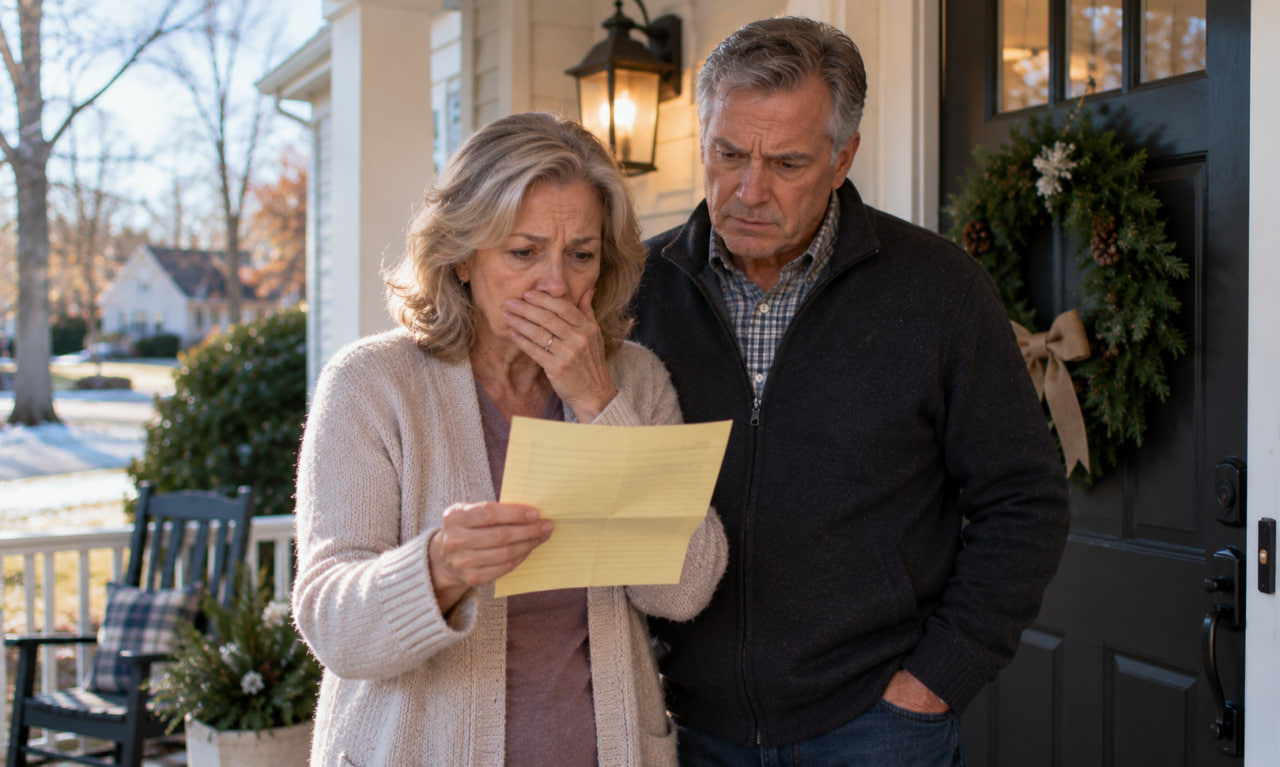
“I understand.”
“Not because of the note.”
Craig looked at me.
“Then why?”
“Because children shouldn’t grow up thinking grandparents are responsible for keeping their parents’ finances stable.”
Craig looked down.
For a while, nobody spoke.
Then he asked:
“What happens if the refinance fails?”
I answered honestly.
“Then we have another conversation.”
“And if I can’t make the business payments?”
“Another conversation.”
“And if everything falls apart?”
I looked at him.
“Then we’ll deal with what actually happened instead of pretending everything is fine.”
He nodded.
I slid the paper toward him.
“Here’s the other condition.”
He looked at me.
“You never use Lily or Noah as leverage again.”
His face reddened.
“I won’t.”
“I don’t mean you won’t write another note.”
I leaned forward.
“I mean you don’t ever make their relationship with us conditional on whether you’re angry with me.”
He looked at Emily.
Then back at me.
“I understand.”
I nodded.
“Good.”
The conversation ended shortly after eight-thirty.
Craig stood by the door.
He seemed about to say something.
Then he turned.
“Walter?”
“Yes?”
“I’m sorry.”
I studied him.
“For what?”
He looked down.
“For the note.”
I waited.
“And for thinking you’d keep paying no matter what I did.”
That was the first completely honest sentence he’d spoken all evening.
I nodded.
“Thank you.”
He left.
Emily remained behind.
She hugged Diane.
Then she came to me.
“Dad.”
“Yeah?”
“Are you really going to make us refinance?”
“Yes.”
She nodded through tears.
“I understand.”
“I love you.”
“I love you too.”
“And Emily?”
“Yes?”
“You’re my daughter.”
She looked at me.
“Don’t ever confuse my financial boundaries with a lack of love.”
Her face crumpled.
She hugged me.
“I won’t.”
After she left, Diane and I stood silently in the doorway.
The house felt empty.
Too empty.
Then Diane said:
“You realize you’re going to miss them terribly.”
“I already do.”
She slipped her hand into mine.
“Then why does this feel right?”
I looked at the road where Emily’s car had disappeared.
“Because sometimes loving people means stopping yourself from carrying them.”
Diane leaned against my shoulder.
For the first time in nine days, neither of us wondered whether we’d done the wrong thing.
But neither of us knew yet that the conversation at our dining table had only uncovered the first layer.
Three days later, Colleen called.
“Walter?”
“Yes.”
“You’re going to want to sit down.”
I laughed.
“That sentence has never led to anything pleasant.”
“I’m serious.”
I sat.
“What happened?”
“There was a problem with the mortgage.”
My stomach tightened.
“What kind of problem?”
“The lender ran a new credit review.”
“And?”
“They found something.”
“What?”
Colleen paused.
“Another loan.”
I stared at the wall.
“What loan?”
“One that doesn’t appear in the documents you gave me.”
I stood.
“Whose name?”
“Craig’s.”
“How much?”
“Two hundred thousand dollars.”
I closed my eyes.
“That’s not the whole problem.”
“What is?”
Colleen’s voice became very quiet.
“The loan is secured against something you own.”
I couldn’t speak.
“Walter?”
“What did he use as collateral?”
Another pause.
Then she said:
“Your property.”
I slowly sat back down.
The room suddenly felt very cold.
Because the property she was talking about wasn’t the house in Dublin.
It wasn’t a rental.
It wasn’t a piece of land I’d bought as an investment.
It was the ten-acre parcel I had owned for twenty-eight years.
The land where my father had taught me how to operate my first excavator.
The land I had always planned to leave to Emily.
And according to Colleen…
Someone had apparently used it to secure Craig’s debt.
Someone who had no legal right to do so.
I looked toward the kitchen.
Diane was washing two coffee cups.
She smiled at me.
I couldn’t smile back.
“Colleen,” I said.
“Yes?”
“Send me everything.”
“I already have.”
“Then we’re going to find out exactly how my property ended up securing my son-in-law’s loan.”
There was a long silence.
Then Colleen said:
“Walter, I don’t think you understand.”
“Understand what?”
“The signature on the loan documents…”
She stopped.
“What about it?”
“It appears to be yours.”
I froze.
“I never signed that.”
“I know.”
“Then whose signature is it?”
Colleen’s answer came quietly.
“That’s what we’re going to find out.”
I looked at Diane.
She was still standing at the sink.
Still unaware.
Still believing that the worst thing our family had to deal with was a missed mortgage payment and a hurtful note.
I walked toward her.
“Diane.”
She turned.
“What is it?”
I looked at my wife.
And for the first time in thirty-six years, I didn’t know how to tell her what had happened next.
Because someone had forged my name.
And whoever had done it hadn’t simply stolen money.
PART 4
I looked at Diane.
She was still standing at the sink.
Still unaware.
Still believing that the worst thing our family had to deal with was a missed mortgage payment and a hurtful note.
I walked toward her.
“Diane.”
She turned.
“What is it?”
I looked at my wife.
And for the first time in thirty-six years, I didn’t know how to tell her what had happened next.
Because someone had forged my name.
And whoever had done it hadn’t simply stolen money.
They had put our entire future at risk.
I told her everything.
I expected anger.
Instead, Diane became completely still.
“Are you sure?”
“Colleen says the documents carry my signature.”
“But you didn’t sign them.”
“No.”
She dried her hands slowly.
“Then who did?”
“I don’t know.”
Diane sat at the kitchen table.
For several seconds, she stared at the yellow note still sitting beside the fruit bowl.
Then she whispered:
“Walter.”
“Yeah?”
“Ask yourself one question.”
“What?”
“Who had access to your information?”
I already knew where her mind was going.
But I didn’t want to go there.
“Craig?”
She didn’t answer.
Instead, she pointed toward the folder.
“You gave him copies of your financial documents when you helped with the mortgage.”
“I gave him copies of the mortgage agreement.”
“And your identification?”
“Some documents.”
“Bank statements?”
“Probably.”
“Tax records?”
I nodded slowly.
“Some.”
Diane’s face fell.
“Then he could have had everything he needed.”
I didn’t sleep that night.
Neither did Diane.
At six the next morning, Colleen called.
“I’ve spoken to the lender.”
“What did they say?”
“They’ve frozen any enforcement action while we investigate.”
“Good.”
“There is more.”
“What?”
“The loan was taken out eighteen months ago.”
I sat up.
“Eighteen months?”
“Yes.”
That meant something.
I thought back.
Eighteen months ago was when Craig’s agency had first started struggling.
The same period when he had begun missing payments to me.
The same period when Emily had told us everything was fine.
The same period when Craig had suddenly become uncomfortable whenever I asked about the business.
“Who received the money?” I asked.
“That’s complicated.”
“Colleen.”
She sighed.
“Some went into the agency.”
“Some?”
“Yes.”
“How much?”
“Approximately eighty thousand.”
“And the rest?”
“Transferred through several accounts.”
My stomach tightened.
“Whose?”
“We’re tracing them.”
I stood.
“Call me when you know.”
“I will.”
I hung up.
Diane was watching me.
“What?”
“I think we need to talk to Emily.”
“I agree.”
But before I could reach for my phone, it rang.
Emily.
I answered.
“Dad?”
“What’s wrong?”
“I need you to come over.”
My heart sank.
“Why?”
“Because I found something.”
“What?”
She was crying.
“Something in Craig’s office.”
I looked at Diane.
“Are you safe?”
“Yes.”
“Is Craig there?”
“No.”
“Where is he?”
“I don’t know.”
I stood up.
“We’re coming.”
“Dad?”
“Yes?”
“Bring your attorney.”
That stopped me.
“Why?”
“Because I think Craig has been lying to all of us.”
Twenty minutes later, Diane and I arrived at Emily’s house.
The front door was unlocked.
Emily was sitting on the living-room floor surrounded by papers.
Her eyes were swollen.
“What happened?”
She pointed toward the hallway.
“His office.”
We followed her.
The room looked as though a storm had passed through it.
Drawers were open.
Cabinet doors hung crooked.
Folders were scattered across the floor.
Emily picked up a stack.
“I was looking for our mortgage documents.”
“Why?”
“Because I called the lender.”
She swallowed.
“They told me there was another lien.”
I looked at her.
“That’s what Colleen found.”
Emily stared at me.
“You already knew?”
“Yesterday.”
“Dad…”
She covered her face.
“I didn’t know.”
“I know.”
She shook her head.
“No. You don’t.”
She reached into a drawer and pulled out an envelope.
“I found this.”
I opened it.
Inside was a photocopy of a power-of-attorney document.
My name appeared at the bottom.
But the signature wasn’t mine.
My hands went cold.
“Where did you find this?”
“Behind the filing cabinet.”
Diane took the paper.
“Why would Craig have this?”
Emily shook her head.
“I don’t know.”
Then she whispered:
“Because maybe he wasn’t acting alone.”
I looked at her.
“What do you mean?”
She pulled out another document.
A company name was highlighted.
I recognized it.
“Who’s this?”
“It’s one of Craig’s investors.”
“Name?”
“Marcus Bell.”
I frowned.
“Never heard of him.”
“Craig said he was helping the agency.”
“How much?”
“Three hundred thousand.”
I stared at the document.
Three hundred thousand.
Suddenly, the missing money made sense.
Craig hadn’t simply borrowed money to save the company.
He had been borrowing from different people.
Using different promises.
And when those promises began collapsing, he’d reached for the one thing he thought nobody would question.
My property.
My name.
My family.
Colleen arrived twenty minutes later.
She examined the documents carefully.
“This is fraud.”
Emily started crying again.
“What happens now?”
Colleen looked at her.
“First, nobody confronts Craig alone.”
“Why?”
“Because we don’t know what else he’s done.”
She turned to me.
“Walter, I need you to think back carefully.”
“About what?”
“Every document you signed for Craig.”
I told her.
The business loan.
The mortgage.
The children’s trust.
The copies of my identification.
The refinancing paperwork.
Then Diane interrupted.
“Wait.”
We all looked at her.
“There was one more.”
“What?”
“About a year ago.”
She looked at me.
“Remember when you were in the hospital?”
I did.
I’d been admitted for three days after a bad infection.
“What about it?”
“Craig came by.”
I frowned.
“Why?”
“He said you had asked him to pick up some documents from your study.”
My heart stopped.
“I never asked him.”
Diane nodded.
“I know that now.”
Colleen’s expression hardened.
“What documents?”
Diane pointed at me.
“Your property deed.”
I felt a chill move through me.
“Where was it?”
“In the old fireproof box.”
“Was Craig alone?”
“Yes.”
“How long?”
“Maybe twenty minutes.”
Colleen wrote something down.
“That’s significant.”
Emily looked horrified.
“He took Dad’s deed?”
“We don’t know yet,” Colleen said. “But we’re going to find out.”
That afternoon, the lender’s investigators arrived.
They traced the forged documents.
The power of attorney had been created using information from an old tax file.