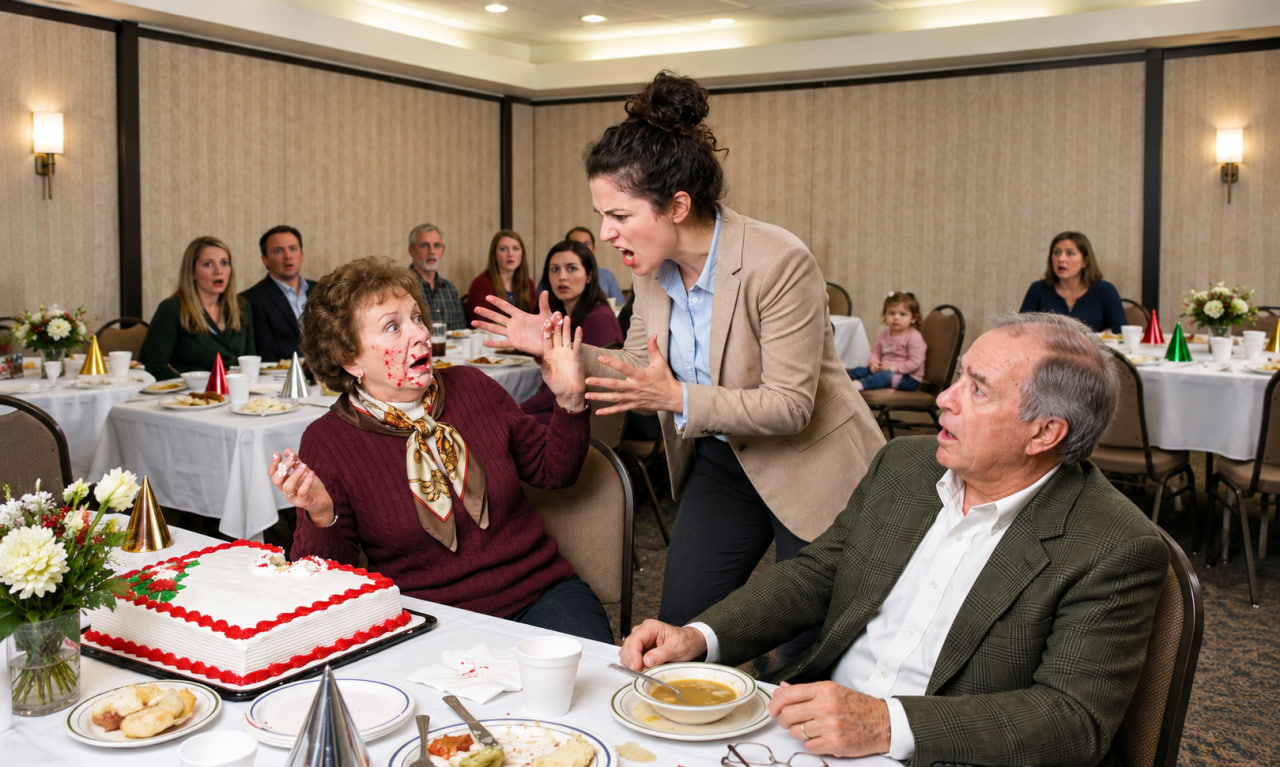
Ethan’s attorney called the incident isolated. He said the family was willing to apologize, attend counseling and move forward without “unnecessarily restricting” Lily’s relationship with her grandmother.
Camille replied that an apology mattered only after safety. She showed the court the earlier videos and the undisclosed daycare pickups, explaining that Ethan had repeatedly given Gloria access to Lily while concealing it from me.
The judge granted temporary orders. Lily would remain with me, Ethan could have supervised parenting time at a neutral center and Gloria could not contact Lily directly or through relatives until the family assessment was complete.
It was not revenge. It was a short-term decision meant to give everyone time to understand whether Lily had been exposed to a pattern of harm.
Outside the courtroom, Ethan finally asked to speak to me. Camille stayed close, and I agreed only because Lily was not present.
“I didn’t know Mom would hit her,” he said.
“You knew enough to tell her not to do it in front of people.”
His face tightened. “I meant she gets too intense.”
“That is not an answer.”
For the first time, he looked less angry than afraid. He said Gloria had always disciplined children harshly, but he thought it was better to keep me from arguing with her because conflict made everything worse.
“You kept Lily from me, too,” I said.
He had no reply.
That night, Marissa sent one final message. While searching her old photos for the court, she had found an audio clip accidentally recorded at a family barbecue four months earlier.
I pressed play.
Gloria’s voice came first. “She keeps telling her mother.”
Then Ethan answered, low and unmistakable.
“Give it time. She’ll learn what not to say.”
Part 4: What Lily Had Been Taught to Hide
Camille asked Marissa to preserve the original audio file and provide a statement describing how it had been recorded. She warned me that one fragment could be challenged in court, but it fit too closely with the daycare records and Ethan’s own words in the birthday video to ignore.
A child advocate was assigned to Lily’s case. Her job was not to decide who was evil or to force Lily to describe adult behavior; she was there to assess what Lily needed to feel safe and to recommend a parenting plan to the court.
Lily began play therapy with a clinician who specialized in young children. I waited outside during the sessions and did not ask what she said afterward.
One afternoon, the therapist told me only that Lily had repeatedly used the phrase “Grandma’s rules.” She had said it while arranging toy figures around a small dollhouse.
“What rules?” I asked before I could stop myself.
The therapist shook her head gently. “It’s important that Lily gets to tell her story in her own way. What matters right now is that she has learned some things must be hidden from you.”
That was enough.
Ethan attended his first supervised visit at the family center the following week. He arrived with a bag of toys, a written apology and a request to speak with Lily alone for “just one minute.”
The supervisor refused. The temporary order required every interaction to remain visible, and Lily did not approach him until he promised that Gloria would not be there.
When he said it, she looked at him carefully.
“Grandma can’t come?” she asked.
“Not today,” Ethan replied.
Lily’s face changed, not with joy but with relief. She sat down beside the toy kitchen and allowed him to join her, but every few minutes she looked toward the door.
The supervisor documented it all.
After the visit, Ethan called me through Camille. He said he had finally listened to the audio Marissa sent and realized how it sounded.
“It’s not what you think,” he said.
“Then tell me what you meant.”
He took a long time to answer. Finally, he admitted Gloria had been using a harsh form of discipline when Lily cried, resisted hugs or asked to come home early. He claimed he had told her to stop several times, but he never removed Lily from her care because he did not want to lose his mother’s help or provoke another family conflict.
“You chose convenience,” I said.
“I thought she would grow out of being scared.”
“She is two, Ethan.”
He began crying then, but I had reached the point where his regret could not replace the protection Lily had needed before. I told him that any relationship he rebuilt with her would have to be based on honesty, patience and actions supervised by people who understood what she had been through.