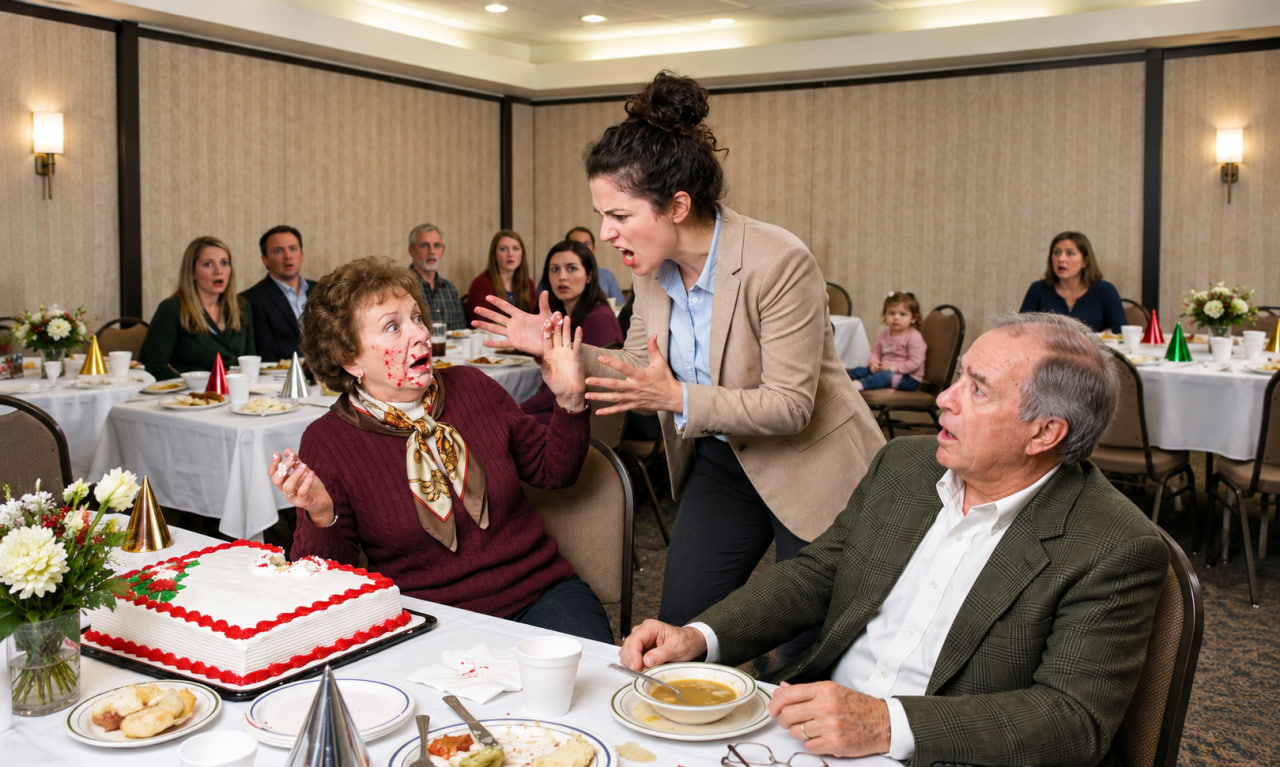
“I don’t know,” I said, and hearing the uncertainty in my own voice made me feel sick.
The clinic social worker spoke with me privately about making a report. I showed her Marissa’s video and the messages Ethan had sent overnight, including the ones accusing me of causing a scene while saying nothing about Lily’s condition.
She did not tell me what decision to make about my marriage. She helped me record what I knew, preserve the video and understand that Gloria should not have unsupervised contact with Lily while the situation was being assessed.
When we returned to Nora’s apartment, Marissa called. Her voice was shaking.
“I should have sent you something sooner,” she said. “I just didn’t know if I was overreacting.”
She forwarded three short clips from prior family gatherings. In one, Gloria yanked Lily away from a toy because she would not hug her. In another, Lily began crying when Gloria reached toward her plate, and Ethan immediately moved his mother’s hand away from the camera.
The third clip lasted only seven seconds. Gloria was scolding Lily near the hallway while Ethan stood beside her.
“Not that hard,” he murmured.
Gloria looked annoyed. “Then teach her to behave.”
The video ended before I could see what happened next, but I did not need more footage to understand the pattern. Ethan had not merely failed to act at the banquet; he had spent months trying to keep his mother’s behavior out of sight.
I texted him once.
Lily and I are safe. Do not come to Nora’s apartment or contact my friend. Any discussion about Lily will go through my attorney.
His response came almost immediately.
You are turning one mistake into a war. Mom said she is sorry.
I stared at the word mistake. Then I turned my phone off and called a family-law attorney recommended by the clinic advocate.
The attorney, Camille Ross, did not promise a dramatic courtroom victory. She told me to keep communication in writing, gather financial records I could legally access and avoid posting the videos or discussing the matter online.
“Your strongest point is not whether Gloria is unpleasant,” she said. “It is whether Ethan can put Lily’s safety ahead of protecting his mother.”
By late afternoon, she had filed for temporary orders limiting Gloria’s contact with Lily. The court scheduled a hearing for the following week.
That evening, as I prepared Lily’s dinner, my phone lit up with an email from Ethan. Attached was a scanned form from six months earlier.
It authorized Gloria to collect Lily from daycare, take her to medical appointments and make emergency decisions if neither parent could be reached.
The signature beneath Ethan’s name was mine.
I had never seen that form before.
Part 3: The Permission I Never Gave
Camille told me not to accuse Ethan of forgery by text. She asked me to forward the form, preserve the email exactly as received and contact Lily’s daycare only to request my own parent records.
The director confirmed that Ethan had submitted the authorization form during a routine update six months earlier. He had told staff I was working double shifts and had asked them to accept the paperwork without calling me because he “handled the family calendar.”
The signature looked like mine, but the date was wrong. I had been out of town at a nursing conference that weekend, and the daycare’s system showed the form had been uploaded from Ethan’s parent portal after midnight.
The director immediately removed Gloria from the pickup list and flagged Lily’s account so that any attempted change required direct confirmation from me. She also gave Camille the record of every time Gloria had collected Lily.
There were nine pickups I had never known about.
On several of those days, Ethan had told me Lily was home with him. In reality, he had arranged for Gloria to take her to her house for hours at a time while I worked late.
I felt foolish for missing it, but Camille stopped me before I could turn that feeling into blame. Ethan had used ordinary details—my shifts, delayed texts, family errands and the assumption that he was a trustworthy parent—to make the arrangement look normal.
At the temporary hearing, the judge did not decide the entire marriage or determine every allegation. She reviewed the clinic note, Marissa’s videos, the daycare records and the authorization form, then focused on the one fact Ethan could not explain away.
Gloria had struck Lily in public, and Ethan had responded by worrying about who saw it.