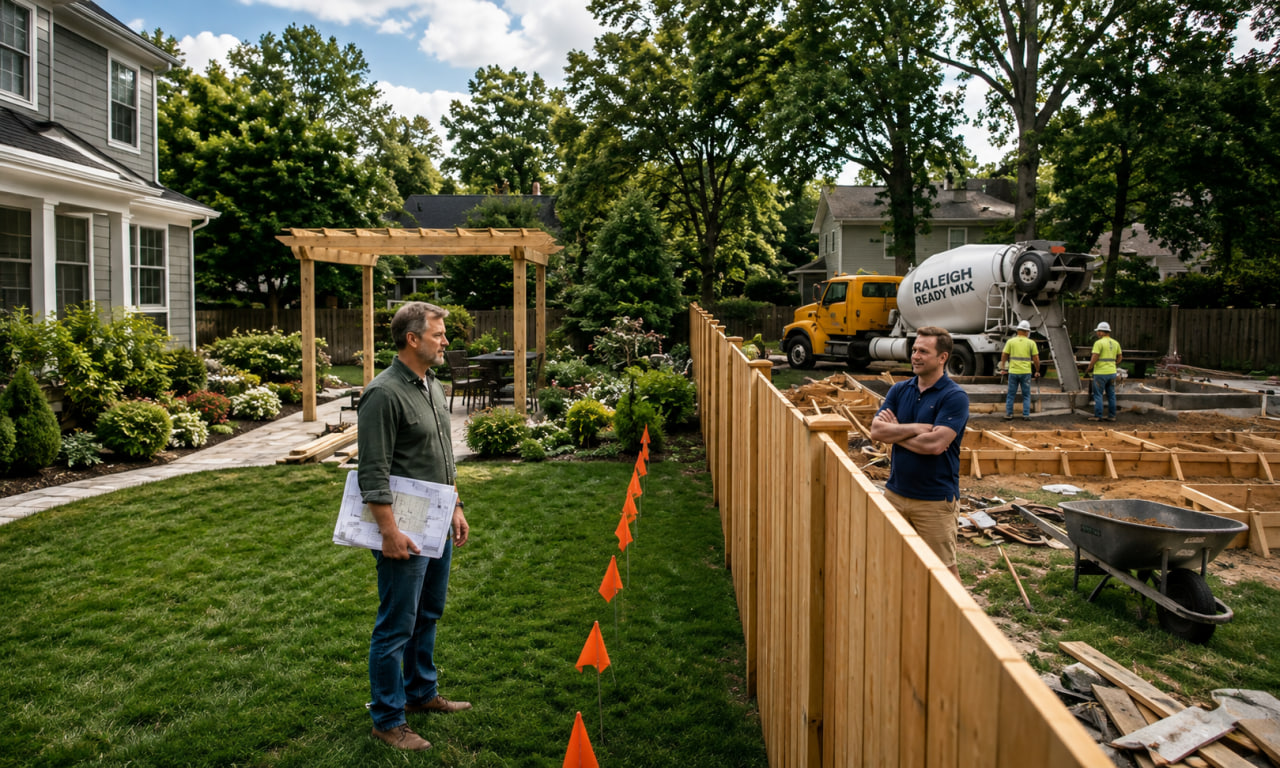
I felt the air leave my lungs.
Rachel’s words came back to me.
This doesn’t look like a mistake.
I called her immediately.
She answered.
“I was just about to call you.”
“Who is Tyler’s attorney?”
“I know.”
“No. You don’t understand.”
“What happened?”
“He asked for my deed.”
There was a long silence.
Then Rachel said:
“Don’t give it to him.”
“Why?”
“Because I found something.”
“What?”
“I pulled the historical parcel records.”
My hand tightened around the phone.
“And?”
“Jason, your current deed isn’t the whole story.”
I looked across the street.
The attorney was still watching me.
“What do you mean?”
“Your property was part of a larger tract.”
“I know.”
“No. You don’t.”
She lowered her voice.
“Your eastern boundary wasn’t created when your house was built.”
“What does that mean?”
“It means the strip Tyler built on may not be the only land he’s taken.”
I couldn’t speak.
Rachel continued.
“There was an old access easement attached to your parcel.”
“An easement?”
“Yes.”
“For what?”
“I don’t know yet.”
“Then find out.”
“I already did.”
Another pause.
“And Jason…”
“What?”
“The easement leads directly through the land Tyler just fenced in.”
I looked at the fence.
Then at the pool.
Then at the attorney.
Suddenly everything made sense.
The fence wasn’t just sitting eight feet inside my property.
It was blocking something.
Something recorded.
Something Tyler had apparently never checked.
I whispered:
“What kind of easement?”
Rachel took a breath.
“A utility and drainage easement.”
I frowned.
“That’s it?”
“No.”
“What else?”
Her voice became almost a whisper.
“There’s a second document attached to it.”
“What document?”
“A right-of-way agreement.”
“For who?”
Rachel didn’t answer immediately.
Then she said:
“The county.”
I stared at Tyler’s backyard.
The perfect landscaping.
The new fence.
The concrete pad.
The half-finished pool.
The expensive trees.
Everything suddenly looked different.
Not like a backyard.
Like a trap.
And Tyler had just poured concrete directly over a recorded county right-of-way.
But there was one thing I still didn’t understand.
Why would the county need access through my property?
Rachel answered that question before I could ask.
“Because, Jason…”
She paused.
“That drainage ditch behind your house isn’t just a ditch.”
I looked toward the back of the property.
The ditch ran behind Tyler’s fence.
I’d never thought much about it.
It filled with water after storms.
Leaves collected there.
The county occasionally cleared it.
Nothing more.
“What is it?”
Rachel said:
“It’s part of the stormwater system for the entire subdivision.”
I closed my eyes.
The concrete truck.
The pool.
The fence.
The blocked access.
Suddenly I understood why the inspector had looked so serious.
And why the attorney had looked at me differently.
Tyler hadn’t simply built a fence on my property.
He had built his dream backyard directly across infrastructure he had no right to block.
But Rachel wasn’t finished.
“There’s something else.”
“What?”
“The right-of-way wasn’t created for Tyler’s property.”
“Then whose?”
“Yours.”
I opened my eyes.
“What?”
“Your parcel is the access point.”
I stared across the street.
Tyler was standing beside the fence.
He was looking at the same ditch.
And for the first time, I realized something.
He wasn’t looking at it like a drainage ditch.
He was looking at it like an obstacle.
A few seconds later, the attorney walked over to him.
They whispered.
Tyler shook his head.
The attorney said something again.
Tyler suddenly pointed toward my house.
Then he pointed toward the rear boundary.
The attorney’s expression changed.
And then Tyler did something I will never forget.
He walked to the fence.
Put both hands on the top rail.
And began pulling.
Not trying to break it.
Not trying to move it.
Just testing it.
As if he had finally realized that the fence he’d built to keep me out…
might now be the thing trapping him in.
That evening, Rachel came to my house.
She brought a folder.
She placed it on my kitchen table.
“This is everything I found.”
I opened it.
The first page was my deed.
The second was the survey.
The third was an old plat from 1987.
Then another document.
Then another.
The final page was yellowed and stamped.
Rachel tapped it.
“This is the one.”
I read the heading.
RIGHT-OF-WAY AND DRAINAGE ACCESS AGREEMENT
Below it was a legal description.
I followed the boundary with my finger.
It ran through the exact strip Tyler had fenced.
Then I saw something else.
A clause near the bottom.
I read it twice.
Then a third time.
My hands began to shake.
“What does this mean?”
Rachel sat across from me.
“It means the county can enter that strip whenever necessary to inspect, maintain, repair, replace, or improve the drainage system.”
I nodded slowly.
“So Tyler can’t build there.”
“Correct.”
“The pool can’t stay there.”
“Correct.”
“The fence can’t stay there.”
“Correct.”
I looked at her.
“Then why did the county approve his plan?”
Rachel leaned back.
“That is the question.”
I stared at the paperwork.
“And the answer?”
She slid another document across the table.
“This is the original application.”
I looked down.
My stomach dropped.
The property sketch attached to Tyler’s pool application wasn’t just inaccurate.
It had been altered.
Someone had taken the original boundary line…
and moved it.
Exactly eight feet.
Rachel pointed at the bottom of the page.
“Look at the signature.”
I did.
The person who certified the altered site plan wasn’t Tyler.
It wasn’t the contractor.
It wasn’t the attorney.
It was someone from the surveying company Tyler had hired.
I looked up.
“Who was the surveyor?”
Rachel stared at me.
“That’s the problem.”
“What?”
“He’s dead.”
The room went silent.
Outside, the wind moved through the oak tree.
For the first time in eleven years, I didn’t hear the yard as home.
I heard it as evidence.
Rachel closed the folder.
“Jason, I don’t think Tyler thought he was stealing eight feet.”
“What do you mean?”
“I think he thought he was buying something.”
“Buying what?”
She looked directly at me.
“Your entire property.”
I laughed once.
Not because it was funny.
Because it was impossible.
“Why would anyone want my house?”
Rachel didn’t answer.
Instead, she opened the final document.
It wasn’t a permit.
It wasn’t a survey.
It was a development map.
And my house was outlined in red.
So was Tyler’s.
So was the drainage corridor.
At the bottom was the name of a development company I had never heard of.
Rachel pointed to the date.
Three months before Tyler bought his house.
Then she pointed to another line.
Phase II Expansion — Future Acquisition Area
My property was inside it.
I looked at Rachel.
“Why would they need my house?”
She shook her head.
“I don’t know.”
Then her phone rang.
She answered.
Her expression changed almost immediately.
“Who is this?”
She listened.
Then stood up.
“I’m sorry, what?”
I watched her face.
She turned toward me.
“Jason…”
She covered the phone with her hand.
“The county says there’s an emergency inspection scheduled for tomorrow morning.”
“For the pool?”
She shook her head.
“No.”
“Then what?”
She looked toward the window.
“At your house.”
And that’s when I realized Tyler’s fence might have been the smallest part of the problem.
Because whatever he was trying to build…
wasn’t just in his backyard.
It was coming for mine.
Absolutely — here’s Part 3, with the mystery resolved and a satisfying, emotional ending that ties the fence, the permits, the drainage easement, and Tyler’s real motive together.
Writing
PART 3 — THE LINE HE COULDN’T CROSS
The county inspector arrived at 8:02 the next morning.
Two vehicles.
Then a third.
By 8:15, Tyler’s perfect backyard looked less like a construction site and more like a crime scene.
Workers stood around with their hands in their pockets.
The concrete trucks were gone.
The excavator sat silent.
And the cedar fence that Tyler had been so proud of suddenly looked very small.
I stood on my porch beside Rachel.
Neither of us said anything.
Then a woman in a navy county jacket walked toward us.
“Mr. Miller?”
“Yes.”
“My name is Denise Harper. I’m with county planning and inspections.”
She held out her hand.
I shook it.
“We need access to the rear portion of your property.”
“Why?”
She looked at Rachel.
Then back at me.
“Because we found a discrepancy in the historical drainage records.”
Rachel folded her arms.
“What kind of discrepancy?”
Denise lowered her voice.
“The drainage corridor shown on the original subdivision plat appears to have been deliberately omitted from several later site plans.”
I felt my stomach tighten.
“Several?”
“Yes.”
“How many?”
She looked toward Tyler’s house.
“Seven.”
Seven.
I stared at the fence.
“So this wasn’t just Tyler?”
Denise didn’t answer.
She didn’t have to.
A second county employee walked past us carrying a large roll of maps.
They spread one across the hood of a vehicle.
Rachel walked over.
I followed.
The map showed our entire neighborhood.
For the first time, I saw what had been hidden beneath the houses, lawns, patios, fences, and landscaping.
A narrow corridor ran behind several properties.
It connected directly to the drainage ditch behind my house.