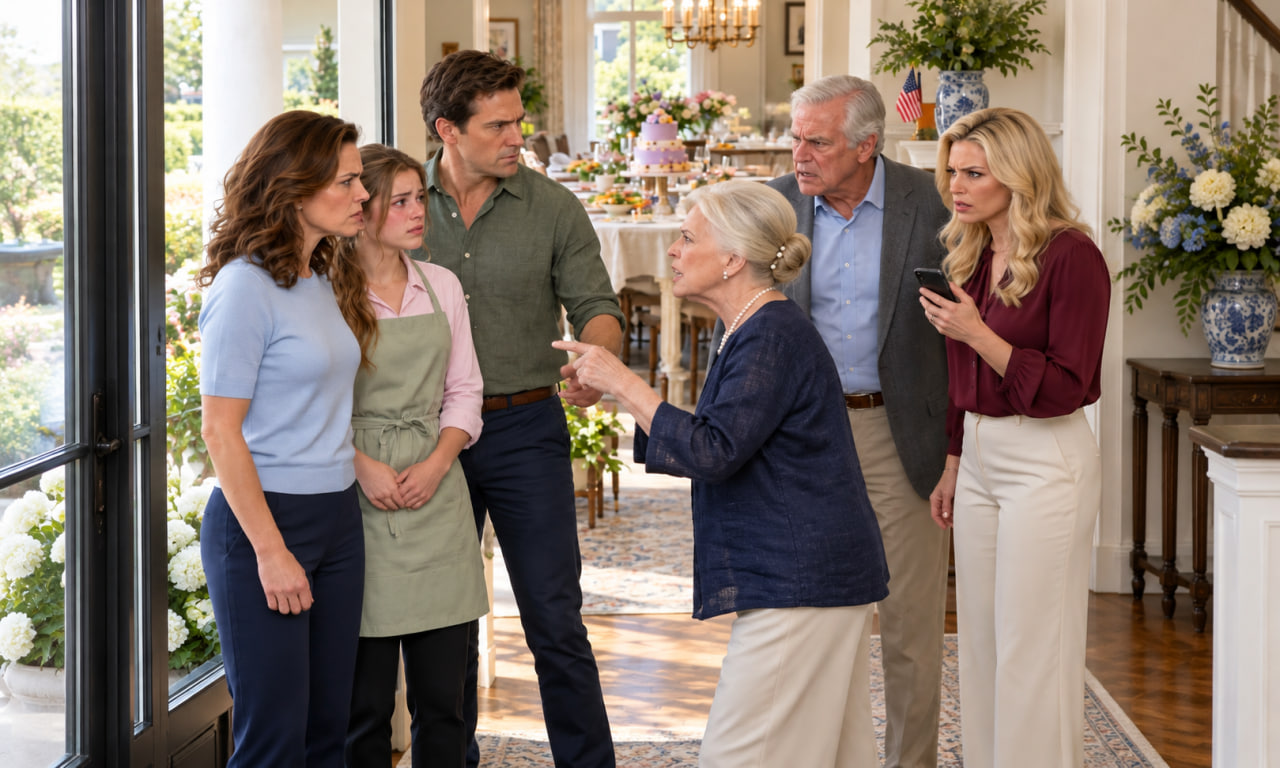
My 17-year-old daughter spent three days preparing a birthday feast for 23 guests to celebrate my mother’s 67th birthday. Ten minutes before the party, Dad texted, “We decided to celebrate at a restaurant instead. Adults only.” Then they charged $1,327.90 to my card for their dinner. I didn’t argue. One phone call changed everything. Fifteen hours later, they were pounding on my door, demanding I fix the consequences.
My seventeen-year-old daughter spent three days cooking for twenty-three people for Grandma’s birthday. At the last minute, Dad announced they’d chosen a restaurant instead. Adults only. I didn’t make a scene. I took action. Fifteen hours later, someone was hammering on my door.
The message arrived ten minutes before our guests were due. I stood in the kitchen doorway, fighting tears over a beet salad.
Not because of the beets, though they resembled something from a surgical tray, but because Ava was moving excitedly around the kitchen as though her future depended on Grandma approving her lavender glaze.
Perhaps, to Ava, it did.
She’d been awake since 5:00 a.m. I knew because I’d heard her alarm.
She’d baked, prepared ingredients, frosted, stirred, burned something and remade it, then steam-cleaned the floor because, as she put it, the kitchen was giving health inspector energy.
The table was ready for twenty-three.
Handwritten place cards, fresh flowers, printed menus. The house smelled of thyme, butter, and an unfamiliar sweetness.
It smelled like an expensive restaurant.
Ava had curled her hair and wore a spotless apron. She looked exhausted but radiant, fueled by adrenaline like a cooking-show finalist.
Then my phone vibrated.
A message appeared in our family group chat, usually reserved for Easter greetings and blurry casserole pictures.
From Dad.
They’d decided to celebrate at a restaurant. Adults only.
No apology.
Not even punctuation.
At first, I assumed it was a joke.
Ava had just removed sugar-free pear tarts from the oven for Grandma’s diabetic neighbor.
She was humming.
I stepped into the hallway, pretending to take a call.
I simply needed my hands to stop shaking.
I reread the message.
They’d decided.
Not Dad alone.
All of them.
I called him first.
He answered after two rings, sounding cheerful.
He asked whether I’d seen his message.
I asked if they were seriously not coming. My voice stayed steady through sheer shock.
He explained they’d changed plans because it was easier. They were already at the restaurant.
I asked whether they were there right now.
Yes. Everyone had arrived, they’d sat down, and the menu looked wonderful.
I fell silent.
Then asked why.
Because Ava had cooked for three days. They’d agreed to celebrate at our house. She’d prepared twenty-three meals and been awake since five.
Dad paused briefly.
Then suggested she shouldn’t take it personally. Surely, she could freeze the leftovers.
He had to go.
The waiter had arrived.
He hung up.
I stared at my phone.
Then called Mom.
She answered normally.
“Hello.”
“Did you really just not come?” I asked.
She sighed.
She told me not to start. The restaurant seemed more convenient, and they didn’t want anyone getting sick.
Sick?
Mom said Ava was only seventeen. Cooking was a sweet gesture, but serving that many people food prepared by a child wasn’t safe.
What if someone got food poisoning?
I reminded her Ava wasn’t five. She’d attended cooking classes, developed a complete menu, sanitized everything, and prepared diabetic-friendly options.
Mom interrupted.
That was nice, she said, but it wasn’t real cooking like food from a restaurant.
I hung up before I screamed.
Next, I called my sister.
Not because I expected sympathy, but because I hoped she hadn’t known about the change.
She had.
“Oh, Jenna,” she said, “don’t guilt everyone over this. She’s crying. She’s dramatic. She’s exhausted. She’s 17. She needs to learn that not everything is about her.”
I reminded her Ava had cooked for twenty-three people.
My sister said nobody wanted to be her test subjects.
Those words made my jaw tighten.
She spoke as though my daughter were some laboratory animal.
I disconnected before she finished.
For a moment, I stood motionless, struggling to breathe.
Behind me, Ava was still talking.
She wondered whether her pomegranate glaze was too sweet and if the lighting was too warm. She wanted guests to feel like they were in a genuine restaurant without making everything artificially fancy.
Then she called for me.
I turned.
My face apparently revealed too much.
She stopped talking and glanced at my phone.
Then took it.
I couldn’t stop her.
She opened the group chat.
Read the messages.
And saw the photograph.
A long restaurant table with raised glasses.
My sister’s children, barely eighteen, smiling beside full plates.
Mom beaming.
Dad holding a wineglass.
Ava stared.
Then called Grandma.
I couldn’t hear the conversation, but watched her nod repeatedly.
Until she stopped.
Her face crumpled.
She didn’t scream or sob.
Tears simply slipped down her cheeks, as though she were embarrassed to be crying.
I reached toward her.
She stepped away.
Carefully, she placed my phone down.
Then faced the cake.
It was beautiful.
Three layers with piped rosettes.
Happy 67th, Grandma.
Written in dark chocolate.
She stared without speaking.
I felt helpless.
Then one thought came.
“No, not this time. Not again.”
I didn’t yet have a plan.
But I refused to let my family decide how Ava’s special moment ended.
Not without doing something.
I’d always thought the worst pain was watching your child cry.
It’s worse watching them suppress tears because they don’t want to upset you.
Later that evening, while my relatives celebrated at the restaurant, I stood outside Ava’s bedroom holding untouched roast duck and wondering how we’d reached this point.
Deep down, I knew.
It had started when I was born.
I was the second daughter, two years younger than my sister and unplanned.
Mom never called me a mistake outright.
She didn’t need to.
She’d say, “We thought we were done after your sister.”
Or, “You were a surprise, but a sweet one.”
To me, those words meant, “We didn’t want another one, but we’re making do.”
My sister embodied everything my parents admired.
Elegant.
Outgoing.
Blonde.
She could twirl around and earn applause.
I could dismantle a broken fan and rebuild it better, only to be scolded for touching things meant for men.
She attended ballet.
I once dismantled a toaster and got grounded for destroying an appliance.
My parents funded her lessons, recitals, and glittering costumes.
When I requested a weekend handicraft course, possibly leatherworking, they claimed there wasn’t money.
Besides, what would I ever do with it?
Years later, I turned those skills into a business.
Today, I own a small, successful company producing custom handmade home goods.
My husband works with wood.
Together, we earn a comfortable living through honest work.
Yet my parents still describe it as a nice little side project.
Meanwhile, my sister has degrees in literature and dance but almost no career stability.
She’s still charming, elegant, and adored.
Ironically, I occasionally support her financially.
Quietly.
Without expecting recognition.
That’s always been my role.
I cover birthdays, travel expenses, and even the occasional broken water heater at my parents’ house.