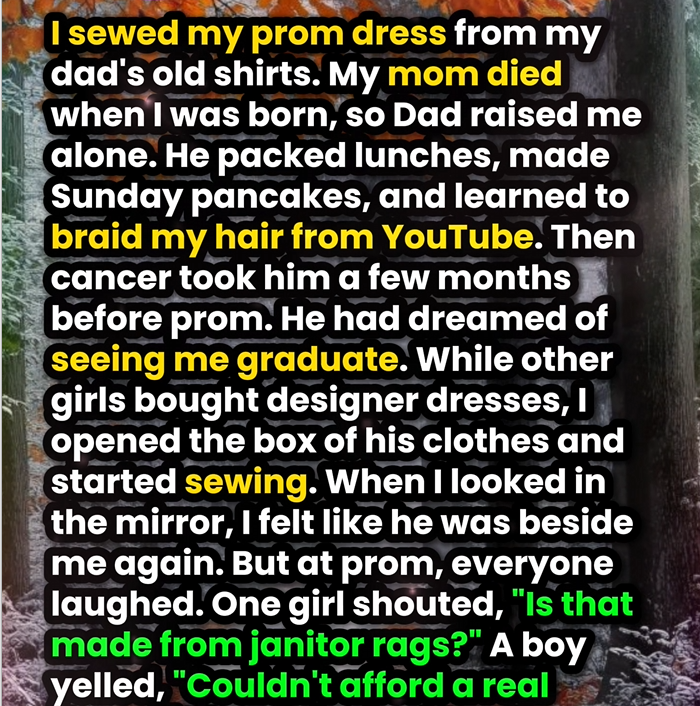
After the funeral, Emily moved in with her aunt.
Her aunt tried her best, but grief made the house feel unfamiliar. Emily’s classmates talked about dresses, dates, makeup appointments, and stretch limos. She nodded along, pretending to care, while secretly wondering how she was supposed to celebrate anything without her father waiting at home.
Then one night, she opened the box of his belongings.
His shirts were folded inside.
She touched the fabric and remembered everything: him rolling up his sleeves to fix a cabinet, wiping pancake flour from his cheek, standing in the kitchen and saying, “One day, kiddo, I’m going to see you walk into prom like a movie star.”
That was when Emily made her decision.
She would wear him with her.
For weeks, she worked after school, cutting, pinning, sewing, ripping seams apart, and starting over. Her aunt helped when the fabric refused to cooperate. Some nights Emily cried over the machine because the dress looked uneven or because the room suddenly smelled like him.
But when she finally tried it on, she did not see a poor girl in old shirts.
She saw love turned into fabric.
Prom night should have been beautiful from the beginning. Instead, the whispers followed her across the gym.
“Is that a joke?”
“Her dad’s clothes?”
“That’s actually embarrassing.”
Emily kept her chin up, but her eyes burned. She found an empty table near the wall and sat down, pretending to adjust her shoes so no one would see her cry.
Then the music stopped.
The principal, Mrs. Alvarez, stepped onto the small stage and took the microphone.
“Students,” she said, her voice firm but warm, “before we continue, I want to recognize someone in this room.”