PART 3
Somewhere, a child was laughing.
Everything looked normal.
But my world no longer felt normal.
For twenty-nine years, I had believed my family’s biggest problem was favoritism.
Madison was always the golden child.
She received the expensive birthday gifts.
She got the bigger bedroom.
She got the new car.
She got help with college.
She got the family vacations.
She got forgiveness whenever she made a mistake.
And I had always been told that I was the “responsible one.”
The phrase had sounded like praise when I was younger.
As I grew older, I realized it was another word for useful.
I was useful.
I worked hard.
I saved money.
I rarely asked for anything.
I helped my parents when they needed it.
I paid bills when they were short.
I signed paperwork when someone said it was “just easier.”
I never imagined those habits would eventually become weapons used against me.
I looked again at Ethan’s message.
Then I checked my bank accounts.
Everything appeared normal.
My credit cards were still active.
My savings were untouched.
No unfamiliar charges appeared.
For the first time, I wondered whether the wedding itself was even the real problem.
Maybe seventy-eight thousand dollars was only the number they wanted me to focus on.
Maybe there was something much bigger hiding behind it.
I decided to meet Ethan.
But I wasn’t going alone.
The next morning, I contacted my attorney, Claire.
I had known Claire for four years through my work.
She specialized in financial and estate law.
When I told her about Easter dinner, she was silent for several seconds.
Then she asked one question.
“Did your father actually give you a notarized contract?”
“Yes.”
“Did he explain what it was?”
“No.”
“Did you sign it?”
“No.”
Her voice became serious.
“Good.”
“Do not sign anything.”
“I already figured that out.”
“And Avery?”
“Yes?”
“Don’t give them another dollar until we understand exactly what they’ve been doing.”
That sentence stayed with me all night.
The following morning, Ethan chose a small café across town.
When I walked inside, he was already waiting.
He looked nothing like the confident cousin I remembered from family gatherings.
His face was pale.
His hands were wrapped tightly around a coffee cup he clearly wasn’t drinking.
When he saw me, he stood.
“Avery.”
“Ethan.”
For several seconds, neither of us sat.
Then he pulled out a thick envelope.
“I brought copies.”
“Copies of what?”
He looked around the café before lowering his voice.
“Everything.”
I sat down.
He pushed the envelope toward me.
Inside were bank statements.
Property documents.
Email printouts.
Insurance papers.
Loan applications.
And several pages carrying my parents’ signatures.
My stomach tightened.
“What am I looking at?”
Ethan swallowed.
“A financial mess.”
I flipped through the first few pages.
A home-equity loan.
A second mortgage.
A private loan.
A credit line.
And then—
I froze.
“What is this?”
Ethan looked at the document.
“That’s the trust.”
“What trust?”
He stared at me.
“The family property trust.”
I slowly looked back at him.
“I don’t know what you’re talking about.”
He rubbed his forehead.
“That’s what scares me.”
He pulled one document from the middle of the stack.
“The house your parents live in isn’t just their house.”
“What does that mean?”
“It means they put it into a trust years ago.”
I frowned.
“Whose trust?”
He looked directly into my eyes.
“Yours.”
I laughed.
Not because it was funny.
Because the alternative was screaming.
“That’s impossible.”
“It’s not.”
“My father would never put the house in my name.”
“He didn’t.”
“Then how is it mine?”
Ethan leaned closer.
“He created a family trust.”
He tapped the paper.
“You were named the beneficiary.”
I stared at the page.
The legal words blurred.
I could see my name.
My full legal name.
Avery Morgan.
There it was.
Listed as beneficiary.
I turned to the next page.
Then another.
Then another.
There were dates going back almost seven years.
I suddenly remembered something.
Seven years ago, my father had asked me to sign some estate paperwork.
He had said it was “standard.”
He told me Mom was getting older and they needed to organize their affairs.
I had signed because I trusted him.
I hadn’t read every page.
I had been twenty-two.
Working two jobs.
Trying to finish school.
Trying to survive.
I had assumed parents didn’t secretly build financial traps for their own children.
Ethan watched my face.
“You remember signing something?”
“Yes.”
“How much?”
“Several documents.”
“Were they notarized?”
“Yes.”
He nodded slowly.
“That was it.”
My heart started beating faster.
“What was it?”
“They created the trust using your identity and your signature.”
“What?”
He immediately shook his head.
“No. Listen carefully.”
“I don’t think you knowingly agreed to it.”
He pulled out another document.
“This signature is yours.”
I looked at it.
It resembled my handwriting.
But something felt wrong.
The slant was slightly different.
The letter A was too narrow.
The final stroke of my last name was wrong.
I had spent years signing my name thousands of times.
I knew my own signature.
“This isn’t mine.”
Ethan nodded.
“That’s what I thought.”
I looked up.
“Then whose is it?”
“That’s what I’ve been trying to find out.”
He opened his phone and showed me several photographs.
Screenshots.
Emails.
Messages between my father and someone named Daniel.
I recognized the name.
Daniel Harris.
My father’s accountant.
“What does he have to do with this?”
Ethan hesitated.
“He has been handling their finances for years.”
“And?”
“And three months ago, Daniel contacted me.”
“Why?”
“He said your parents were preparing for the wedding.”
“That makes sense.”
“No.”
His expression hardened.
“It doesn’t.”
He showed me another message.
Daniel: ‘The wedding is being used to move money from Avery’s accounts.’
I felt cold.
I read it again.
“And what exactly does that mean?”
Ethan shook his head.
“I don’t know.”
“That’s why I contacted you.”
I leaned back.
For the first time since Easter dinner, I finally understood why my parents had been so desperate.
The wedding wasn’t simply a seventy-eight-thousand-dollar expense.
It was a deadline.
Something needed to happen before the wedding.
Something involving me.
Something involving my money.
Something involving the property.
I looked at Ethan.
“Why would my parents need seventy-eight thousand dollars?”
“I asked the same question.”
“And?”
He opened another document.
“This is the actual wedding estimate.”
I expected to see flowers.
Catering.
A venue.
Music.
Photography.
Instead I saw something completely different.
A payment schedule.
Large transfers.
Private vendors.
Consulting expenses.
Legal fees.
A property deposit.
I stared at one line.
$41,500 — Escrow Transfer
I pointed at it.
“What is that?”
Ethan hesitated.
“I think that is the answer.”
“To what?”
“To why they need your money.”
My hands became cold.
“What property?”
“The family lake house.”
I nearly dropped the paper.
“Our lake house?”
Ethan nodded.
“The one your parents told everyone was going to be sold after the wedding.”
“But why?”
“Because there is a loan against it.”
“How much?”
He took a breath.
“Three hundred and forty thousand dollars.”
I stared at him.
The number seemed impossible.
“My parents don’t owe three hundred forty thousand dollars.”
“They do.”
“On the lake house?”
“Yes.”
“Why?”
“They borrowed against it.”
“For what?”
Ethan didn’t answer immediately.
That silence told me everything.
“They didn’t spend the money on the wedding.”
“No.”
“Then what?”
He slid one final document across the table.
It was a corporate registration.
A company name appeared at the top.
Madison Grace Events LLC.
I looked at Ethan.
“My sister’s company?”
“Yes.”
“She doesn’t own an event company.”
“She does.”
“She started it six months ago.”
“I know.”
I stared at the paperwork.
Six months.
Exactly six months.
The same period when Madison suddenly began telling everyone her wedding was going to be “luxury.”
She had started posting photographs of expensive venues.
Designer dresses.
Custom invitations.
Private tastings.
A destination honeymoon.
I had assumed someone else was paying.
I had been wrong.
“Where did the startup money come from?”
Ethan looked at me.
“Your parents.”
“From the lake house loan?”
“Yes.”
I sat perfectly still.
Then something clicked.
The wedding was not simply Madison’s wedding.
It was the public face of a business scheme.
And my parents were using their daughter’s wedding as cover.
But I still didn’t understand why I was involved.
Ethan reached into the envelope one last time.
“There’s one more thing.”
He handed me a copy of a bank authorization.
My eyes landed on the account holder.
My name.
I stopped breathing.
“What is this?”
“That’s an account connected to the trust.”
“I don’t have an account like this.”
“Yes, you do.”
“No.”
“Avery, the account has been active for six years.”
“Who has access?”
Ethan’s face changed.
“Your father.”
I stood so quickly that my chair scraped backward.
“What?”
“Your father has been managing it.”
“Under what authority?”
“Power of attorney.”
I stared at him.
“Power of attorney?”
“Yes.”
“Who gave him that?”
He pointed at the signature.
“You did.”
I looked at the signature.
Again, it looked like mine.
Again, it wasn’t.
I felt sick.
“Someone forged my signature.”
Ethan lowered his voice.
“And that’s not the worst part.”
I looked at him.
“What could possibly be worse?”
He pulled out another sheet.
“This account received deposits from multiple properties.”
“How much?”
He swallowed.
“Over the last six years?”
“Yes.”
“Just over four hundred and eighty thousand dollars.”
My chest tightened.
“Four hundred and eighty thousand?”
“Yes.”
“And where is the money now?”
Ethan didn’t answer.
He didn’t have to.
I already knew.
“Gone.”
He nodded.
“Almost all of it.”
The café suddenly seemed too loud.
Every conversation around us faded into meaningless noise.
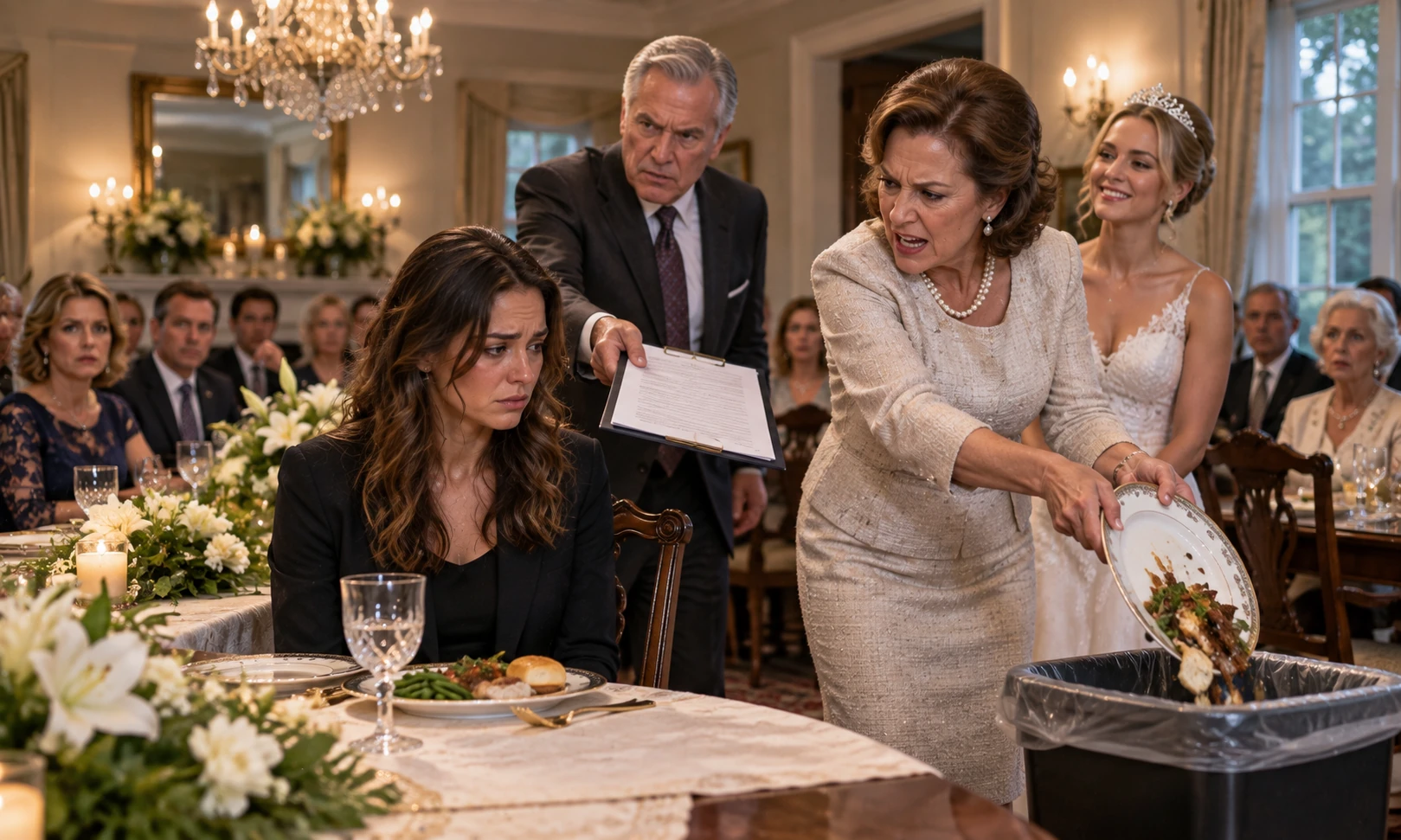
I thought about Easter.
My mother’s voice.
You owe your sister.
My father’s voice.
Pay seventy-eight thousand or leave.
Madison’s voice.
I already booked the venue with your credit card.
It had all seemed insane.
Now it looked calculated.
They weren’t asking me for seventy-eight thousand.
They were trying to force me into accepting responsibility for money that had already disappeared.
They wanted me to sign their contract.
Why?
Because perhaps once I signed, I would legally acknowledge the debt.
I looked at Ethan.
“What happens if I had signed that contract?”
He stared at me.
“You could have become responsible for the wedding debt.”
“Only that?”
He shook his head.
“Not just the wedding.”
My stomach dropped.
“What else?”
“The contract contains a clause transferring several financial obligations to you.”
I felt my knees weaken.
I sat again.
“How many?”
“Five.”
“What are they?”
“Loans.”
“Property taxes.”
“Business liabilities.”
“Credit obligations.”
“And a personal guarantee.”