PART 4
Three days after Christmas, I was still in the hospital.
My daughter was stable.
That was the sentence every doctor repeated.
Stable.
Not safe.
Not out of danger.
Stable.
I had learned to hate that word.
It meant we were waiting.
Waiting to see whether my body could hold together long enough for my baby to finish growing.
Waiting to see whether the bleeding would return.
Waiting to see whether the contractions would stop.
And, perhaps most painfully, waiting to see what David would do next.
He didn’t visit.
Not once.
Instead, his attorney sent me a message.
David requests that all communication regarding the incident go through counsel.
I read it twice.
Then I laughed.
Not because anything was funny.
Because the absurdity of it was almost unbearable.
My husband had pushed me toward the floor, destroyed my phone, refused to call an ambulance while I was bleeding, and now he wanted our marriage to become a legal proceeding.
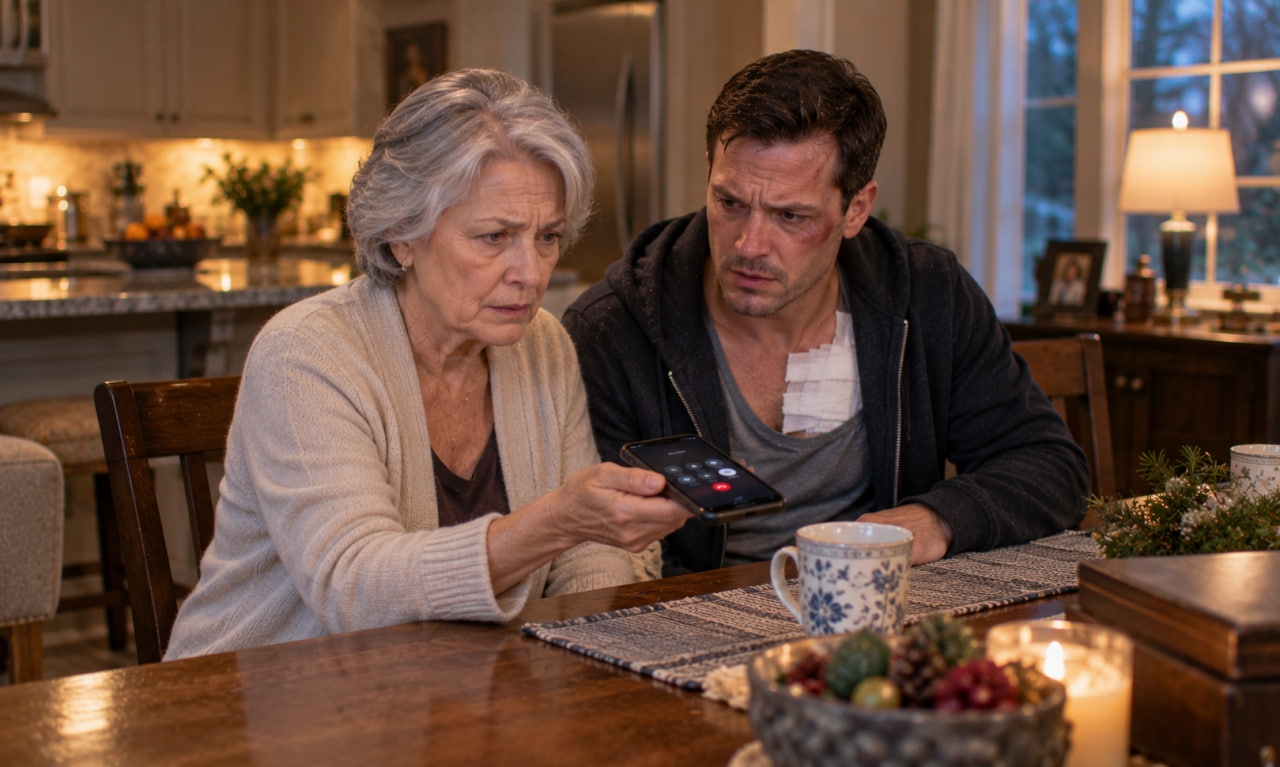
My father took the phone from my hand.
“You don’t answer.”
“I wasn’t going to.”
“Good.”
He placed it on the table.
Then he looked at me.
“You need to understand something.”
“What?”
“David isn’t protecting himself from you.”
“Then who?”
“He’s protecting himself from what he knows is coming.”
I stared at him.
“What is coming?”
Before my father could answer, the hospital room door opened.
A woman in a dark blue suit stepped inside.
She was in her early fifties, with gray streaks in her hair and the calm expression of someone who had spent decades watching powerful people panic.
My father stood.
“Elaine.”
She nodded.
“Chief Justice.”
Then she looked at me.
“Anna.”
I frowned.
“You know me?”
“I’ve known of you for years.”
She pulled a chair beside my bed.
“I am not here as your father’s representative.”
She paused.
“I’m here because I was David’s supervising attorney when he started working at the firm.”
My stomach tightened.
“Was?”
She looked at my father.
Then back at me.
“Yes.”
I slowly sat up.
“What happened?”
Elaine opened a thin folder.
“David resigned yesterday.”
I wasn’t surprised.
“What does that have to do with me?”
“Everything.”
She placed a document on the bed.
“Three months ago, your husband discovered that an internal investigation had begun at his firm.”
“Why?”
“Financial misconduct.”
I stared at her.
“David?”
She nodded.
“He had been moving client funds between accounts.”
My mouth went dry.
“How much?”
“Enough to end his career.”
My father said nothing.
Elaine continued.
“He didn’t steal the money in the traditional sense. He used it to cover another client’s losses, expecting to replace it before anyone noticed.”
“And did he?”
“No.”
She looked at me.
“Someone discovered the discrepancy.”
“Who?”
“Your husband.”
I frowned.
“What?”
“David discovered the missing money himself.”
I didn’t understand.
Elaine explained.
“He had been using another attorney’s credentials to authorize transfers. When he realized the audit would expose him, he attempted to make the other attorney look responsible.”
I stared at her.
“That doesn’t sound like David.”
She gave me a tired smile.
“You don’t know David as well as you think.”
Neither did I.
That sentence stayed with me.
For years, I had thought David was controlling because he was ambitious.
I thought Sylvia was cruel because she was old-fashioned.
I thought they treated me like an outsider because they believed I wasn’t good enough.
But there had been another explanation.
They were afraid.
Afraid that I would discover what they were hiding.
Elaine opened another folder.
“There is more.”
My father looked at her.
“Are you certain?”
“Yes.”
She turned toward me.
“Anna, your husband and his mother have been discussing your father’s position for nearly two years.”
My blood ran cold.
“Why?”
Elaine hesitated.
“Because they believed you would eventually inherit a substantial amount of your family’s wealth.”
I laughed bitterly.
“I don’t have access to my father’s money.”
“I know.”
“They knew that.”
“They didn’t care.”
She placed several printed emails in front of me.
I recognized Sylvia’s email address.
One message read:
If she has a child, the family connection becomes permanent.
Another:
We need to make sure the house remains under David’s control.
Another:
Her father won’t allow a scandal involving his daughter. Use that.
My hands began shaking.
“They planned this?”
Elaine nodded.
“Not necessarily the assault.”
She carefully chose her words.
“But they planned to isolate you.”
I looked at my father.
He looked devastated.
“They wanted me dependent on David.”
“Yes.”
“Why?”
Elaine answered.
“Because David had debts.”
I closed my eyes.
“How much?”
“Over two million dollars.”
My eyes opened.
“What?”
“He owed private lenders, gambling debts, and money connected to the financial misconduct.”
I stared at the ceiling.
Two million dollars.
The man who had complained about my grocery spending.
The man who had told me I didn’t contribute enough.
The man who had made me feel guilty for buying a pair of shoes while pregnant.
He had been drowning in debt.
And he had married me while hoping my family could eventually rescue him.
My father finally spoke.
“Anna, there is one thing you need to know.”
I looked at him.
“What?”
“The house.”
“What about it?”
“It wasn’t David’s house.”
I frowned.
“What?”
My father took out another document.
“You bought it.”
I stared at him.
“I did not.”
“You did.”
He smiled sadly.
“Six months before your wedding, I placed the purchase money into a trust for you.”
My mouth fell open.
“I thought the house was David’s.”
“It was never his.”
“Why didn’t you tell me?”
“Because you told me you wanted a marriage based on love.”
I began crying.
“So you gave me a house and didn’t tell me?”
“I gave you protection.”
He looked away.
“I didn’t know you’d need this much.”
For several minutes, nobody spoke.
Then I remembered something.
“The Christmas dinner.”
My father looked at me.
“What about it?”
“Why did Sylvia insist on having it here?”
Elaine’s expression changed.
“Because she wanted the house sold.”
I froze.
“What?”
“David was planning to refinance it.”
“But he couldn’t.”
“Not without your authorization.”
I suddenly remembered the documents David had repeatedly asked me to sign.
Loan papers.
Property forms.
Things he told me were routine.
I had refused because they made me uncomfortable.
He had called me paranoid.
Now I understood.
They weren’t trying to make me a servant.
They were trying to make me desperate enough to sign away my only protection.
The Christmas dinner had been an opportunity.
They wanted me exhausted.
Humiliated.
Emotional.
They wanted me to believe I had nowhere else to go.
And then David could present me with paperwork and tell me that signing was the only way to save our marriage.
My father closed the folder.
“They underestimated you.”
I looked at him.
“No.”
I wiped my tears.
“They underestimated themselves.”
Two weeks later, I was discharged from the hospital.
I returned home with strict instructions to rest.
But it wasn’t the home I remembered.
The locks had been changed.
The cameras were being replaced.
Every financial account had been reviewed.
And David had been served with a protective order.
He wasn’t allowed to enter the property.
The first time I saw him again was outside the courthouse.
He looked different.
Not powerful.
Not confident.
Just tired.
He approached me.
My attorney immediately stepped between us.
David stopped.
“Anna.”
I didn’t answer.
“I need to talk to you.”
“No.”
“Five minutes.”
“No.”
“I never meant for you to get hurt.”
I looked at him.
“Your mother pushed me.”
“I know.”
“You watched me bleed.”
“I was scared.”
“You destroyed my phone.”
“I panicked.”
“You lied.”
He looked down.
“I know.”
I stepped closer.
“You didn’t panic, David.”
He looked at me.
“You made choices.”
His eyes filled with tears.
“I loved you.”
“No.”
He shook his head.
“I did.”
“You loved what you thought I could give you.”
He didn’t answer.
That was enough.
Then Sylvia appeared behind him.
She looked furious.
“This is what your father does,” she snapped. “He destroys people who disagree with him.”
I turned toward her.
“My father didn’t destroy your family.”
I paused.
“You did that yourself.”
She pointed at me.
“You think you’re better than us because your father is a judge?”
“No.”
I looked directly into her eyes.
“I think I’m better than the woman who pushed her pregnant daughter-in-law onto a floor.”
The courthouse steps went silent.
Sylvia’s face turned red.
“You will regret this.”
I smiled.
“No, Sylvia.”
“I regret not leaving sooner.”
The hearing lasted six hours.
David’s attorney attempted to argue that I had fallen accidentally.
Then my lawyer presented the security footage.
The courtroom watched the recording.
Nobody spoke.
There was no dramatic music.
No screaming.
Just the cold truth.
Sylvia pushed me.