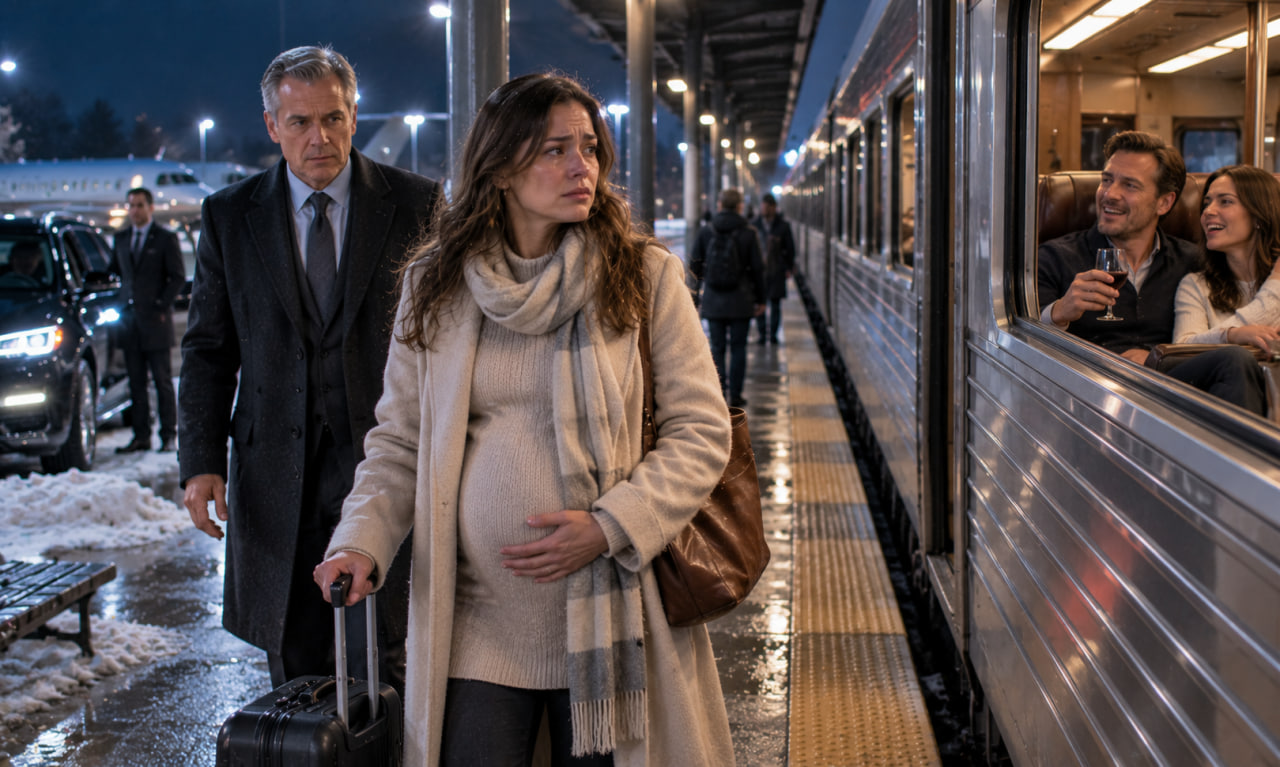
So I agreed.
We met in a small law office downtown.
Marlene was a woman in her late fifties.
Elegant.
Tired.
And much less frightening than I had imagined.
She sat across from me.
“Claire.”
I nodded.
“You have every reason to hate me.”
“I don’t know you well enough to hate you.”
She smiled sadly.
“That sounds like something your father taught you.”
“He taught me not to judge people before hearing both sides.”
Marlene looked down.
“Then let me tell you what happened.”
I waited.
“Daniel came to me last year.”
“Why?”
“He was drowning in debt.”
I frowned.
“Debt?”
She nodded.
“Credit cards. Gambling. Private loans. Things I didn’t know about until he was desperate.”
My stomach tightened.
“Gambling?”
She looked embarrassed.
“Yes.”
I remembered the nights Daniel had said he was working late.
The business trips.
The unexplained withdrawals.
The expensive dinners.
The sudden obsession with investments.
I had believed him.
Marlene continued.
“He told me he could fix everything if he had access to your money.”
I stared at her.
“He said you wouldn’t miss it.”
I felt my hands go cold.
“He planned to take my money?”
“Yes.”
“Why didn’t you stop him?”
“I tried.”
She pulled an envelope from her handbag.
“I have proof.”
Inside were emails.
Messages.
Documents.
One message made my blood run cold.
It was from Daniel.
Once the baby is born, Claire will be too emotional to fight. I’ll convince her to put the townhouse into both our names. After that, we can refinance it.
I stopped breathing for a moment.
There were more.
Her trust isn’t directly accessible, but I can work around it.
Another:
She trusts me completely. That’s the advantage.
I closed my eyes.
Four years.
Four years of believing I had married a man who protected me.
He had been studying how to access what I owned.
Marlene watched me.
“I am sorry.”
I looked at her.
“Why did you give me these?”
“Because I made a mistake.”
“What mistake?”
“I thought I could save my son.”
She swallowed.
“Instead, I helped him become worse.”
The investigation lasted months.
Daniel’s lawyers tried everything.
They argued the money was legitimate.
They claimed the transfers were business investments.
They claimed I had voluntarily allowed him to manage our finances.
But documents don’t have feelings.
Bank statements don’t forget.
Emails don’t lie when they’re authenticated.
And Richard Bell was very good at his job.
Eventually, the truth came out.
Daniel had been running a private investment scheme with his mother and sister.
It wasn’t some massive criminal empire.
It was something more ordinary.
And therefore more dangerous.
Debt.
Greed.
Desperation.
He had borrowed from one person to pay another.
Moved money between accounts.
Used marital funds to cover losses.
Taken loans against assets he didn’t own.
And when he realized the hole was becoming impossible to fill, he had planned to use my trust.
My pregnancy had never softened him.
He had seen it as an opportunity.
A vulnerability.
That was the part that hurt the most.
Not the money.
Not the train.
Not even the woman.
The pregnancy.
Our child.
He had looked at the mother of his unborn daughter and thought:
She’s too weak to stop me.
He had been wrong.
By March, the divorce was finalized.
Daniel received none of my trust assets.
He didn’t receive the townhouse.
He didn’t receive the family investments.
The court ordered him to repay what could be traced to him.
Vanessa cooperated with the investigation.
Marlene accepted responsibility for her part and returned a significant portion of the money.
Daniel faced criminal charges related to financial fraud.
He lost his job.
His friends disappeared.
His social circle collapsed.
The man who had once walked into restaurants expecting everyone to recognize him was now avoiding cameras outside the courthouse.
But I never celebrated.
Because revenge had never been what I wanted.
I wanted peace.
And eventually, I found it.
My daughter was born in April.
Her name was Emma.
When the nurse placed her in my arms, I cried.
Not because I was sad.
Because I had survived.
My father stood beside the hospital bed.
He touched Emma’s tiny hand.
“She has your eyes.”
I smiled.
“And your stubbornness.”
He laughed.
“I was going to say intelligence.”
“You can say both.”
Emma curled her fingers around mine.
I looked down at her.
“I almost let someone convince me I wasn’t enough.”
My father shook his head.
“You were never the problem.”
I knew that now.
Six months later, I moved into a new house.
Not the townhouse Daniel had loved to brag about.
A smaller home near the ocean.
It had wide windows.
A little garden.
And a nursery overlooking the water.
For the first time in years, the house was quiet in a peaceful way.
No arguments.
No financial questions.
No walking on eggshells.
No wondering who was lying.
One evening, I stood on the porch holding Emma.
The sun was setting.
My father sat nearby drinking coffee.
“You know,” he said, “you never did tell me why you got off that train.”
I looked at Emma.
“I think I finally understood that if I stayed on that train, I’d keep staying everywhere.”
He nodded.
“That’s true.”
“I had spent years telling myself things weren’t that bad.”
“And then?”
I smiled.
“And then my husband made me stand in a freezing train aisle while he drank wine in first class.”
My father laughed quietly.
“Sometimes clarity arrives in strange ways.”
I looked toward the ocean.
“I’m glad I got off.”
A year later, I received one final letter.
It was from Daniel.
I almost threw it away.
Instead, I opened it.
There were only a few paragraphs.
He wrote that he was sorry.
That he had ruined everything.
That he finally understood what he’d lost.
That he had loved me.
Maybe part of him had.
But I no longer needed to know.
At the bottom of the letter was one sentence.
I hope someday you can forgive me.
I folded the paper.
I didn’t burn it.
I didn’t tear it apart.
I simply put it into a drawer.
Forgiveness, I had learned, wasn’t always about letting someone back into your life.
Sometimes it meant refusing to carry their ugliness anymore.
I could forgive him.
And still never return.
Three years after the train ride, I returned to Cleveland.
Emma was three.
We stopped at the same station.
She held my hand as we walked along the platform.
“Mommy, train!”
“Yes.”
“Are we going on it?”
I smiled.
“Not today.”
She looked disappointed.
“Why?”
I crouched beside her.
“Because we’re going somewhere else.”
“Where?”
I pointed toward the parking lot.
“My grandfather is waiting.”
She smiled.
“Grandpa!”
She ran toward him.
My father opened his arms and caught her.
I stood back and watched.
For a moment, I remembered the woman I’d been that night.
Pregnant.
Alone.
Freezing.
Standing in a train aisle while two people laughed.
She had believed getting off that train meant she had lost her marriage.
She hadn’t understood yet.
She had lost something much smaller.
A lie.
And in losing that lie, she had gained her life.
My father looked at me.
“You coming?”
I smiled.
“Yeah.”
I walked toward them.
Emma reached for my hand.
I took it.
And as we walked away from the station, I realized something.
The best thing that happened to me that winter wasn’t the private plane.
It wasn’t the money.
It wasn’t exposing Daniel.
It wasn’t even the divorce.
It was the moment I stepped off that train and stopped asking myself whether I was being difficult for wanting basic kindness.
I had spent years believing love meant enduring.
Now I knew better.
Love should never require you to disappear so someone else can feel important.
And sometimes the strongest thing a woman can do isn’t scream.
It isn’t fight.
It isn’t destroy.
Sometimes it’s simply this:
Stand up.
Pick up her suitcase.
Step off the train.
And walk toward the life she was always meant to have.
I looked at my daughter.
She squeezed my hand.
“Mommy?”
“Yes, sweetheart?”
“Are we going home?”
I smiled.
“Yes.”
This time, I knew exactly where home was.
It wasn’t a townhouse.
It wasn’t a bank account.
It wasn’t a man’s last name.
Home was the little girl holding my hand.
Home was the father who came when I called.
Home was waking up without fear.
Home was finally becoming myself again.
And as the three of us walked into the winter sunlight, I didn’t look back at the train.
There was no reason to.
I had already gotten off.
And I was never getting back on.