“He poisoned them?”
“We don’t know yet.”
Claire whispered,
“My father used to complain about a burning sensation in his stomach.”
I stopped breathing.
The exact words.
The same words my mother had used.
Ruiz looked at me.
“That’s why we’re reopening the cases.”
Three months passed.
Richard remained in jail awaiting trial.
His attorneys tried everything.
They claimed the evidence had been misunderstood.
They claimed he was being framed.
They even suggested my mother had poisoned herself to make Richard look guilty.
But then the laboratory results came back.
The substance found in my mother’s tea matched the chemical residue found in Richard’s office.
His fingerprints were on the container.
His DNA was found on the tea packets.
And the handwritten dosage calculations matched his writing.
There was nowhere left to hide.
Then investigators discovered something even more devastating.
Richard had kept a spreadsheet.
It contained names.
Dates.
Ages.
Assets.
Medical conditions.
And estimated life expectancy.
Beside each name was a number.
The amount he expected to receive.
My mother’s name was near the top.
Beside it:
$4,100,000
And underneath:
Expected completion: Tuesday.
I stared at that line for a long time.
Tuesday.
The day after my mother would have died.
He had planned it down to the day.
But there was another column.
One that made Detective Ruiz call me immediately.
It was labeled:
MAYA — DEPENDENCY
Underneath were notes.
“Financial isolation.”
“Remove outside influence.”
“Make her distrust mother.”
“Control accounts.”
“Encourage guilt.”
I felt sick.
Richard hadn’t only been trying to kill my mother.
He had been slowly separating me from everyone who loved me.
He wanted me dependent on him.
He wanted my mother gone.
And eventually, he wanted access to everything she owned.
The marriage had never been about love.
At least not for him.
It had been an operation.
And I had been the easiest person to manipulate because I loved him.
The trial began eight months later.
The courtroom was packed.
Reporters filled the back rows.
Claire Bennett sat behind me.
My mother sat beside her.
She looked older than she had before the poisoning.
But she was smiling.
Richard was brought into the courtroom wearing a dark suit.
He looked thinner.
Older.
For a second, I remembered the man I had once loved.
Then I remembered my mother’s hospital bed.
And the memory disappeared.
Richard looked at me.
His eyes were cold.
Then he smiled.
That frightened me more than anger would have.
During the prosecution’s opening statement, the attorney described Richard’s scheme.
He had targeted vulnerable people.
Gained their trust.
Obtained access to their finances.
Isolated them from family.
Forged documents.
Stole money.
And when necessary…
He eliminated the person standing between him and the inheritance.
Richard’s attorney stood and claimed the prosecution had built an elaborate fantasy around circumstantial evidence.
Then Dr. Castillo took the stand.
He explained exactly what the poison had done to my mother’s body.
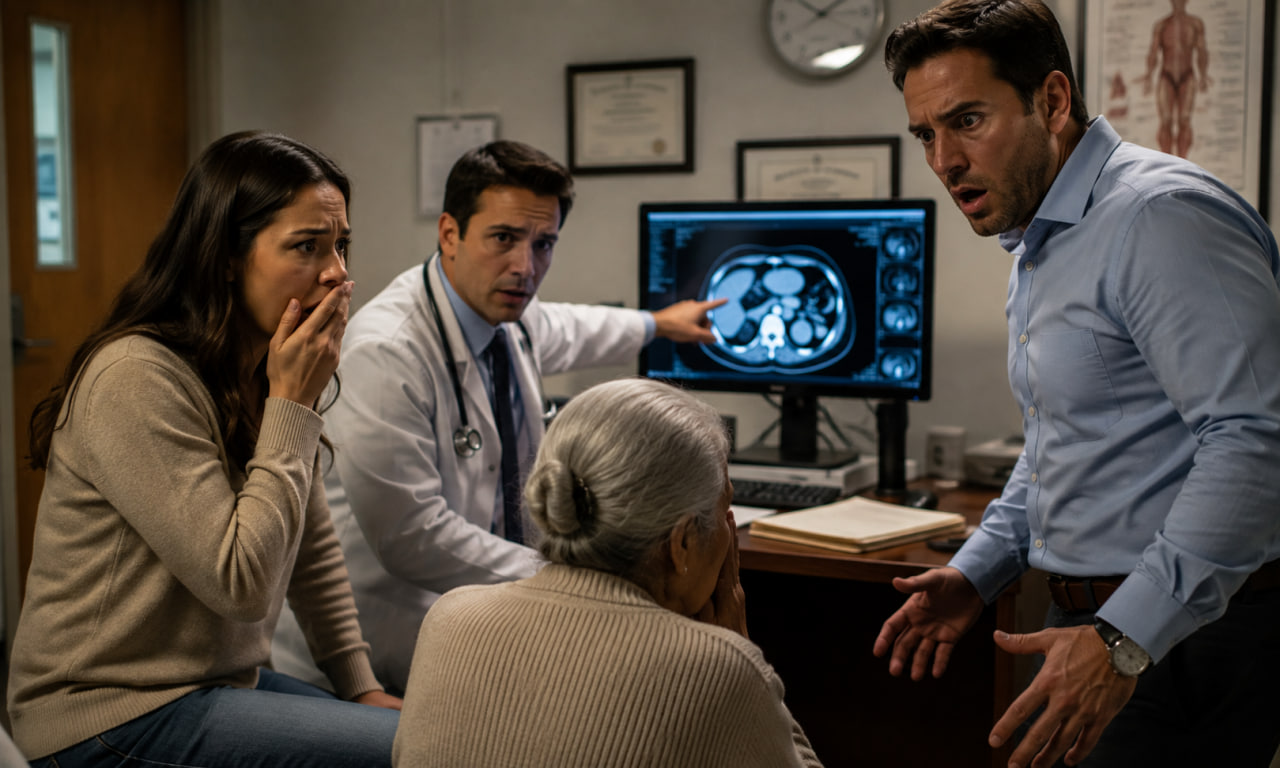
The courtroom watched the CT scan on the large screen.
“These injuries were consistent with repeated exposure to a corrosive toxic substance.”
The prosecutor asked,
“Could this have happened naturally?”
“No.”
“Could one accidental exposure explain it?”
“No.”
“Was the concentration in her system dangerous?”
Dr. Castillo looked toward the jury.
“Fatal.”
The courtroom became silent.
Then came the forensic evidence.
The tea.
The container.
The fingerprints.
The notebook.
The forged documents.
The spreadsheet.
Everything pointed toward one person.
Richard.
Then Claire testified.
She told the jury about her father.
About his sudden illness.
About Richard.
About the inheritance.
About the strange burning sensation.
Her voice broke when she said:
“My father trusted him.”
I looked at my mother.
She was crying.
But she didn’t look away.
Neither did I.
Then it was my turn.
I walked to the witness stand.
Richard watched me.
For the first time, I saw something resembling fear in his eyes.
The prosecutor asked me one question.
“Mrs. Harrison, why did you take your mother to the hospital despite your husband’s objections?”
I looked directly at Richard.
“Because she told me she was hurting.”
The prosecutor nodded.
“And what happened afterward?”
I took a breath.
“I learned that the man I trusted with my life had been trying to take hers.”
The courtroom was silent.
I continued.
“But he made one mistake.”
The prosecutor asked,
“What mistake?”
I looked toward my mother.
“He underestimated how much a daughter would fight to keep her mother alive.”
Richard’s face changed.
For the first time, he looked small.
Not powerful.
Not wealthy.
Not important.
Just a frightened man sitting behind a defense table.
THE VERDICT
The jury deliberated for six hours.
Six hours felt like six years.
When they returned, I held my mother’s hand.
The foreperson stood.
“On the charge of attempted first-degree murder…”
A pause.
“Guilty.”
My mother’s fingers tightened around mine.
“On the charge of poisoning an elderly person…”
“Guilty.”
“Financial exploitation…”
“Guilty.”
“Forgery…”
“Guilty.”
“Insurance fraud…”
“Guilty.”
“Identity theft…”
“Guilty.”
Richard closed his eyes.
His attorney whispered something to him.
He didn’t answer.
The judge later sentenced him to decades in prison.
But the most important part wasn’t the number of years.
It was that he could never again walk into my mother’s house.
Never touch her finances.
Never control my life.
Never hurt another vulnerable person.
As officers led him away, he stopped.
He turned toward me.
“Maya.”
I didn’t answer.
“I loved you.”
Those words should have hurt.
They didn’t.
I simply looked at him.
“You loved what you thought you could get from me.”
Then I turned away.
And never looked back.
ONE YEAR LATER
A year after Richard’s arrest, my mother stood in her garden again.
She wore a wide straw hat.
Her hands were covered in soil.
She was planting bougainvillea.
I watched from the porch.
“You know,” I said, “the doctor told you not to overdo it.”
She laughed.
“Doctors always say that.”
“Mom.”
She smiled.
“I’m fine.”
I smiled back.
“You’ve been saying that for seventy-five years.”
She paused.
Then laughed so hard she had to sit down.
It was the most beautiful sound I’d heard in months.
Her health wasn’t perfect.
She still had medical appointments.
She still had difficult days.
But she was alive.
And she had something she hadn’t had before.
Peace.
The money from the estate became a completely different story.
My mother changed her will again.
This time, she didn’t leave the fortune sitting quietly in investments.
She created a foundation.
The Teresa Harrison Senior Protection Fund.
Its purpose was to help elderly people who were being financially exploited or abused.
She told me,
“If my money almost became the reason someone killed me, then I’ll make sure it becomes the reason someone else survives.”
The foundation helped hundreds of elderly people.
Some needed legal assistance.
Some needed housing.
Some needed protection from relatives.
Others simply needed someone to believe them.
My mother became an advocate for elderly victims.
And every time she spoke publicly, she repeated the same message:
“Pain is not attention-seeking.”
“Confusion is not permission.”
“And getting older does not mean your voice matters less.”
THE FINAL LETTER
Two years after Richard’s conviction, I received a letter from prison.
I almost threw it away.
Instead, I opened it.
There were only a few paragraphs.
Richard apologized.
He blamed his childhood.
His father.
His business failures.
His fear of poverty.
His greed.
Everyone except himself.
At the very end, he wrote:
“I know you hate me.”
I stared at the sentence.
Then I folded the letter.
I didn’t hate him.
That surprised me.
I had spent so long imagining revenge.
Imagining him suffering.
Imagining justice would somehow make me whole.
But eventually I realized something.
Hatred was another form of letting him control me.
So I wrote one sentence on the back of his letter.
Then I mailed it back.
It said:
“You no longer have a place in my life.”
Nothing more.
Nothing less.
THREE YEARS LATER
One Sunday morning, I woke to the smell of coffee.
I walked downstairs.
My mother was sitting at the kitchen table reading the newspaper.
She looked up.
“You’re late.”
I laughed.
“It’s Sunday.”
“Exactly.”
I poured myself a cup.
She pushed the sugar toward me.
Then she looked out the window.
The bougainvillea was blooming.
Bright pink flowers covered the fence.
The same flowers that had been there before the nightmare.
Before the hospital.
Before Richard.
Before everything changed.
My mother reached across the table and took my hand.
“Do you ever wonder what would have happened if you had listened to him?”
I knew exactly what she meant.
If I had believed Richard.
If I had accepted that my mother was “dramatic.”
If I had stayed home that morning.
If I had waited another week.
I looked at her.
“Every day.”
She squeezed my hand.
“Then don’t think about what could have happened.”
“Why?”
“Think about what you did.”
I smiled.
“You saved me,” I said.
She shook her head.
“No, sweetheart.”
Her eyes filled with tears.
“You saved me.”
We sat there holding hands.
Two women who had survived the same man.
Two lives he had tried to control.
Two people who had discovered that sometimes love isn’t loud.
Sometimes love is simply refusing to ignore someone’s pain.
Sometimes love is driving your mother to the hospital when everyone else tells you she’s exaggerating.
Sometimes love is believing the person who says, Something is wrong.
And sometimes…
Love is the reason a monster’s plan fails.
My mother lifted her coffee cup.
“To second chances.”
I raised mine.
“To surviving.”
She smiled.
“To us.”
Our cups touched.
Outside, the morning sun warmed the garden.
The house was quiet.
Safe.
Ours.
And for the first time in years, I understood something Richard could never take from me.
He had tried to steal my mother’s life.
He had tried to steal her fortune.
He had tried to steal my independence.
He had tried to make me afraid of the people who loved me.
But he had failed.
Because the thing he never understood was this:
You can control a person’s money.
You can manipulate their trust.
You can even convince them to doubt themselves.
But you cannot control the moment they finally see the truth.
And once I saw the truth…
I chose my mother.
I chose myself.
And I chose a life that would never again belong to him.
The bougainvillea outside the window moved gently in the morning breeze.
My mother leaned back in her chair.
And I smiled.
The nightmare was over.
Not because we forgot what happened.
But because it no longer controlled us.
We had survived.
We had healed.
And together, we had turned the darkest thing that ever happened to us…
into a reason to protect others.