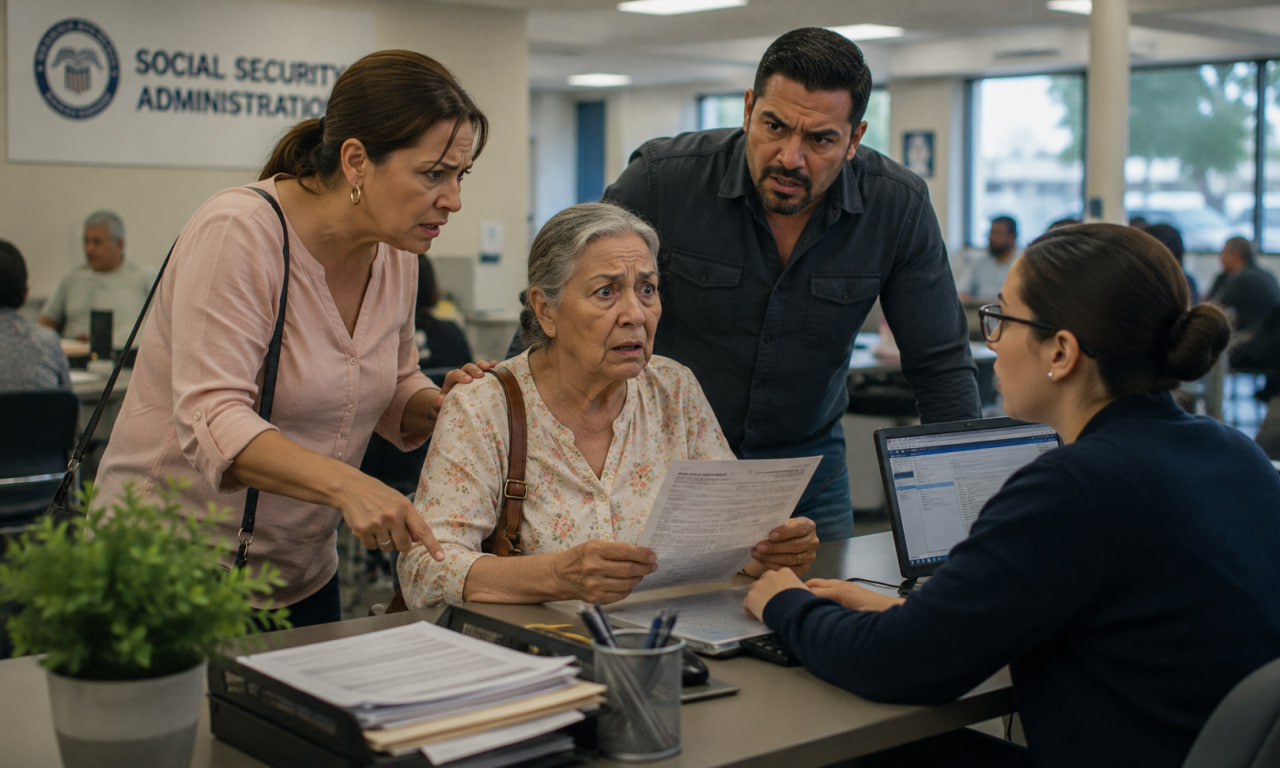
The next morning, I called the number Brenda had given me.
I reported the identity theft.
I explained the death record.
The benefits card.
The payments.
The address.
And finally, I told them about Sam.
The investigator assigned to my case was a woman named Denise Carter.
She was calm.
Too calm.
She asked me questions for nearly two hours.
Then she said:
“Mrs. Miller, I’m going to tell you something you may not like.”
“I’ve heard that sentence a lot lately.”
She didn’t laugh.
“The Social Security fraud is serious.”
“I know.”
“But that’s not what concerns me most.”
“What does?”
“The death record.”
“Why?”
“Because someone didn’t simply report you dead.”
She paused.
“They provided documentation.”
“What kind?”
“Identification.”
My heart sank.
“Whose?”
“Yours.”
I couldn’t speak.
Denise continued.
“Someone presented documents that made it appear they were legally authorized to report your death.”
“But I’m alive.”
“We know.”
“Then how?”
“We’re investigating.”
“Can you tell me who did it?”
“Not yet.”
“Can you tell me where my money went?”
“We’re tracing it.”
“Can you tell me whether my daughter was involved?”
A long silence.
Then:
“We haven’t ruled her out.”
My heart cracked.
Not because I was surprised.
Because hearing it from another person made the possibility real.
I whispered:
“Please find out.”
“We will.”
Before we ended the call, Denise asked one final question.
“Mrs. Miller, did you ever give your daughter your Social Security card?”
“Yes.”
“When?”
“About three years ago.”
“What happened around that time?”
I thought.
Then remembered.
Paula had come to my house one evening.
She said she needed my Social Security number for a health insurance application.
I had handed her my card.
She kept it overnight.
The next day she returned it.
I had never thought twice about it.
Until now.
“Three years ago,” I whispered.
Denise became very quiet.
“That timing may be important.”
That afternoon, someone slipped an envelope underneath my front door.
There was no name on it.
No return address.
Inside was a photograph.
I recognized the house immediately.
The house on Maple Street.
And standing on the front porch was a man with gray hair.
My breath stopped.
Sam.
My husband.
Twenty years older.
But unmistakably him.
There was another person standing beside him.
A woman.
I didn’t recognize her.
On the back of the photograph, someone had written:
HE DIDN’T DO THIS ALONE.
Below that:
ASK YOUR DAUGHTER WHAT HAPPENED THREE YEARS AGO.
And beneath that was one final sentence:
BEFORE THEY MAKE YOU DISAPPEAR FOR REAL.
I sat down on the floor.
For the first time that day, I allowed myself to cry.
But the tears didn’t last.
Because underneath the fear was something stronger.
The woman who had spent her whole life surviving had finally realized something.
I wasn’t fighting for money anymore.
I wasn’t even fighting to restore my name.
I was fighting to find out why the people I loved had buried me while I was still alive.
And I was going to find the answer.
No matter who it hurt.
No matter where it led.
Even if the trail ended at my own daughter’s front door.
PART 4
The photograph stayed on my kitchen table all night.
I couldn’t sleep.
Every time I closed my eyes, I saw Sam standing on that porch.
Alive.
Older.
Gray-haired.
Alive.
After twenty years of believing he was dead, I finally had proof that the man I had mourned was breathing somewhere in Michigan.
But the photograph raised an even more frightening question.
Who had sent it?
And why?
At 5:30 the next morning, I called Denise.
She answered on the third ring.
“Mrs. Miller?”
“I received something last night.”
“What?”
“A photograph of my husband.”
There was a pause.
“Your husband?”
“Sam.”
“Did you know where he was?”
“No.”
“Send me a copy.”
I did.
A few minutes later, Denise called back.
“Don’t contact him.”
“Why?”
“Because we need to verify the photograph first.”
“He’s my husband.”
“Mrs. Miller, legally, we don’t even know what happened yet. Please let us do our job.”
I sat at my kitchen table.
“Someone is trying to scare me.”
“Possibly.”
“Or warn me.”
“Possibly.”
“Either way, I need answers.”
Denise sighed.
“I understand.”
Then she said something that made my stomach tighten.
“We traced part of the benefit payments.”
“Where did they go?”
“Several accounts.”
“Whose?”
“We can’t disclose everything yet.”
“Denise.”
“There is one name you should know.”
My heart started pounding.
“Who?”
“Jared Thompson.”
I closed my eyes.
Paula’s husband.
My son-in-law.
The man who had always looked at my property as if it belonged to him.
“What did he do?”
“Money from the account connected to your benefits was transferred into an account associated with a company he owns.”
I couldn’t speak.
Then Denise added:
“That’s not all.”
“What else?”
“There are transfers to another person.”
“Who?”
“Samuel Miller.”
My husband.
I gripped the edge of the table.
“So my husband and my son-in-law were both receiving my money?”
“We’re still investigating.”
“But you said the money went to them.”
“Some of it did.”
I stood.
“How much?”
“Enough to make this more than simple identity theft.”
“What does that mean?”
“It means someone may have planned this.”
I looked at the photograph.
Twenty years.
My entire life had been built around the belief that Sam abandoned us.
What if that wasn’t true?
What if the disappearance itself had been part of something bigger?
At nine that morning, Denise came to my house.
She brought another investigator with her.
His name was Robert Hayes.
He placed a folder on my kitchen table.
“We need to go through your history,” he said.
“I’ll tell you anything.”
He opened the folder.
“Three years ago, your daughter requested a replacement Social Security card on your behalf.”
My chest tightened.
“She told me she was helping me.”
“She also accessed your bank information.”
“I gave her permission to help with bills.”
Robert nodded.
“Did you ever sign a power of attorney?”
“No.”
“Any medical authorization?”
“No.”
“Any document saying she could act on your behalf?”
“No.”
He looked at Denise.
Then back at me.
“That’s important.”
“What?”
“The document used to establish representation appears to contain your signature.”
I stared at him.
“I didn’t sign it.”
“We believe that.”
He pulled out a copy.
The signature looked like mine.
Almost perfect.
But there was something wrong.
I touched it.
“I sign my ‘S’ differently.”
Robert looked at me.
“What?”
“My S.”
I pointed.
“When I write my name, the S is open at the top. This one is closed.”
Denise leaned over.
She studied it.
Robert nodded.
“That’s something our forensic examiner can verify.”
I suddenly remembered Paula sitting at my kitchen table three years ago.
The yellow folder.
The same kind of folder she had brought to the Social Security office.
My daughter had always been organized.
She kept documents.
Copies.
Passwords.
Receipts.
Things I thought were responsible.
Now they looked like weapons.
“Why would she do this?”
Neither investigator answered.
I whispered:
“She was my baby.”
Denise sat beside me.
“Sometimes people make terrible choices for reasons that don’t excuse what they did.”
“But why?”
Robert closed the folder.
“We may know soon.”
That afternoon, Paula called.
I almost didn’t answer.
But I did.
“Mom?”
“What do you want?”
She started crying.
“Can I come over?”
“No.”
“Please.”
“No.”
“I need to tell you everything.”
I froze.
“Everything?”
“Yes.”
“Then tell me now.”
She was silent.
Finally she whispered:
“Dad is alive.”
“I know.”
The line went completely quiet.
“You know?”
“Someone sent me his photograph.”
“Who?”
“I don’t know.”
She began sobbing.
“Mom, I never wanted this.”
“What didn’t you want?”
“I never wanted you to be hurt.”
“You declared me dead.”
“I didn’t.”
“You gave them my Social Security card.”
“I gave Jared the documents.”
“Why?”
“Because he told me Dad was helping us.”
I couldn’t breathe.
“What does your father have to do with Jared?”
Paula cried harder.
“I found Dad three years ago.”
Everything inside me stopped.
“You what?”
“I found him.”
“Where?”
“He contacted me.”
“Why?”
“He said he needed help.”
“What kind?”
“He said he had another family.”
I felt dizzy.
“Another family?”
“Yes.”
My knees weakened.
I sat down.
Paula continued.
“He had been living under another name.”
“Why?”
“I don’t know.”
“You do know.”
“No, Mom.”
“Then why did he need me declared dead?”
“He didn’t.”
I froze.
“What?”
“Mom… Dad didn’t declare you dead.”
“Then who did?”
Paula stopped crying.
Her voice became barely audible.
“Jared.”
The room went silent.
I could hear the refrigerator humming.
“Why?”
“I don’t know everything.”
“Tell me what you know.”
“He found out Dad had been sending me money.”
“Money?”
“Yes.”
“For what?”
“To help me.”
“With what?”
“Our debts.”
I closed my eyes.
Paula had never told me they were in debt.
“They owed money to people.”
“What people?”
“I don’t know.”
“You expect me to believe that?”
“I’m telling you the truth.”
I heard a car door slam outside.
Paula whispered:
“Mom, I can’t talk anymore.”
“Paula.”
“I love you.”
“Don’t hang up.”
“I love you.”
The call ended.
I stood.
A black SUV had stopped across the street.
Jared’s car.
My hands trembled.
Then my phone rang again.
It was Denise.
“Mrs. Miller, are you alone?”
“Yes.”
“Lock your doors.”
I did.
“Why?”
“Jared Thompson just left his residence.”
My heart stopped.
“He’s coming here?”
“We don’t know.”
“How do you know?”
“Because his bank records show a large withdrawal this morning.”
“How much?”
“Twenty-five thousand dollars.”
I looked toward the window.
The SUV was gone.
Denise continued:
“We also found something else.”
“What?”
“A flight reservation.”
“Where?”
“Arizona.”
“For when?”
“Tonight.”
I stared at the photograph of Sam.
Suddenly, everything became clear.
Jared wasn’t running from me.
He was running from the investigators.
And if he was leaving tonight, there was something he desperately didn’t want them to discover.
That evening, I received another envelope.
This time there was a name on it.
SAM MILLER.
Inside was a handwritten letter.
I recognized the handwriting immediately.
I had spent twenty years reading birthday cards, grocery lists, and notes from that man.
It was his.
The letter began:
Susan,
If you’re reading this, then they failed to keep you buried.
My hands began shaking.
I continued.
I know you hate me. You have every right to.