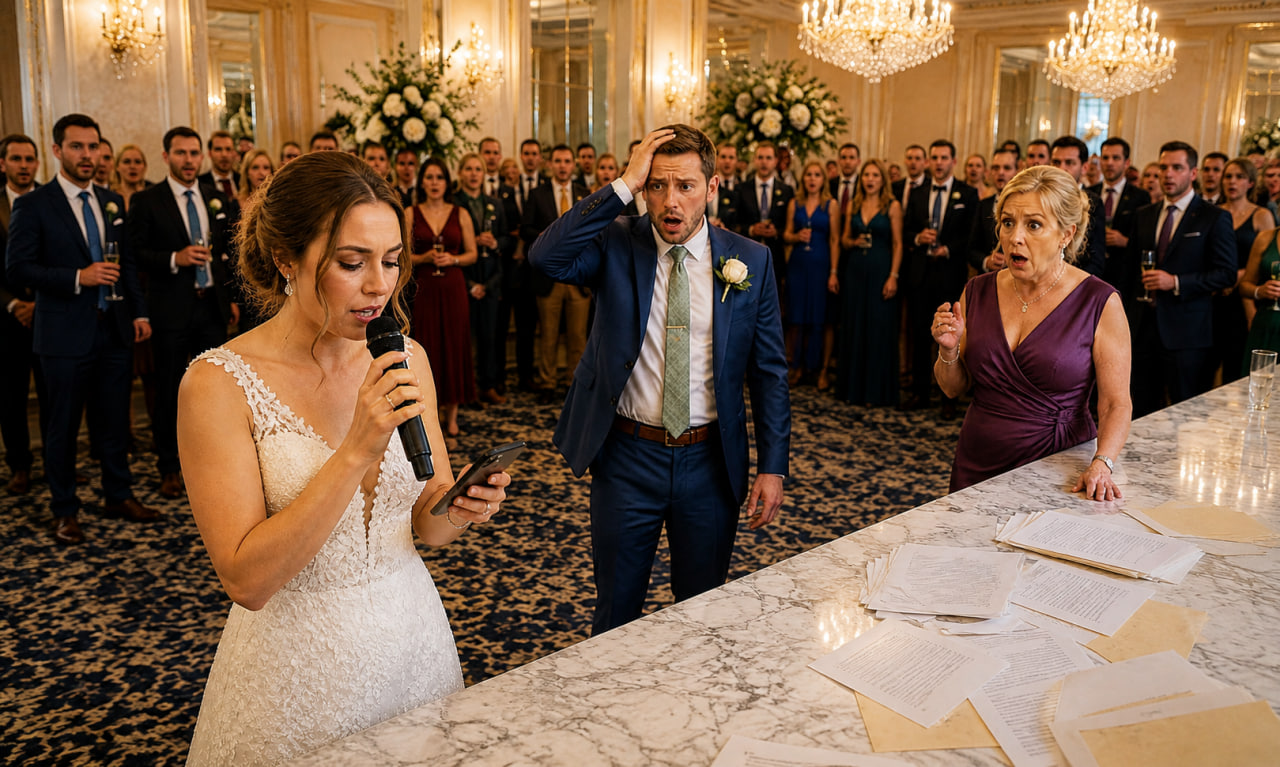
“That characterization is inflammatory.”
“The ballroom footage is clearer than adjectives.”
I turned toward Grace.
“Footage?”
She smiled.
“Your cousin Ellen sent three angles.”
Within days, recordings from the reception began circulating through family groups and professional circles before eventually reaching strangers online. I received messages from women describing fiancés demanding ownership of their houses, future mothers-in-law asking invasive questions about finances, and relationships in which control had been disguised as commitment.
One message stayed with me.
“I wish I had done what you did.”
That was when I realized how many women recognized what had happened to me. Their circumstances were different, but the pattern was painfully familiar.
Michael’s professional life soon began unraveling as well. He worked in private wealth management, a career built almost entirely on convincing clients that he could be trusted with their assets, and footage of him attempting to dictate what happened to his bride’s property was hardly reassuring.
Clients began asking questions. One removed a portfolio, another followed, and eventually Michael’s firm placed him on temporary leave.
Margaret tried defending him publicly, but her efforts only made the situation worse. During a church luncheon, she complained that modern women no longer understood sacrifice, prompting someone to ask whether “sacrifice” meant surrendering real estate without consent.
Three weeks after the wedding, Michael sent me a letter.
“Caroline,
I handled everything badly. My mother is old-fashioned and afraid of being alone. I should have discussed it with you privately. I was embarrassed, and I reacted poorly. We can still fix this. We don’t have to throw away a marriage over an apartment.
Michael”
I read it twice, searching for something that never appeared.
An actual apology.
Michael still framed the problem as my reaction rather than his behavior. The language had softened, but the strategy underneath it remained unchanged, so I placed the letter beside my copy of the prenuptial agreement and continued with the annulment.
The hearing itself was surprisingly brief.
Michael appeared in a gray suit while Margaret sat behind him clutching her handbag. When the judge gave him an opportunity to speak, he stood and attempted to reduce everything that happened to a misunderstanding.
“Your Honor, this was a misunderstanding between newlyweds that became public before it could be resolved.”
The judge looked over her glasses.
“You informed your wife during the reception that your mother would be moving into her premarital residence?”
“I phrased it poorly.”
“That was not my question.”
Michael had no answer.
Grace stood next.
“My client requests annulment and full enforcement of the prenuptial agreement.”
The judge granted both.
Outside the courtroom, Michael caught up with me near the elevators.
“Caroline.”
I stopped.
“My mother pushed too hard.”
I almost smiled because even after everything, his first instinct was still to move responsibility onto someone else.
“There it is.”
“What?”
“The first betrayal after the last one. Blame her.”
“She did push.”
“And you carried.”
He fell silent.
“You could have said no to her at any point.”
“She’s my mother.”
“And I was your wife.”
The elevator arrived, and I stepped inside. Michael remained outside, looking as though he believed one final sentence might somehow reverse everything.
“Did you ever love me?”
“Yes.”
His expression changed.