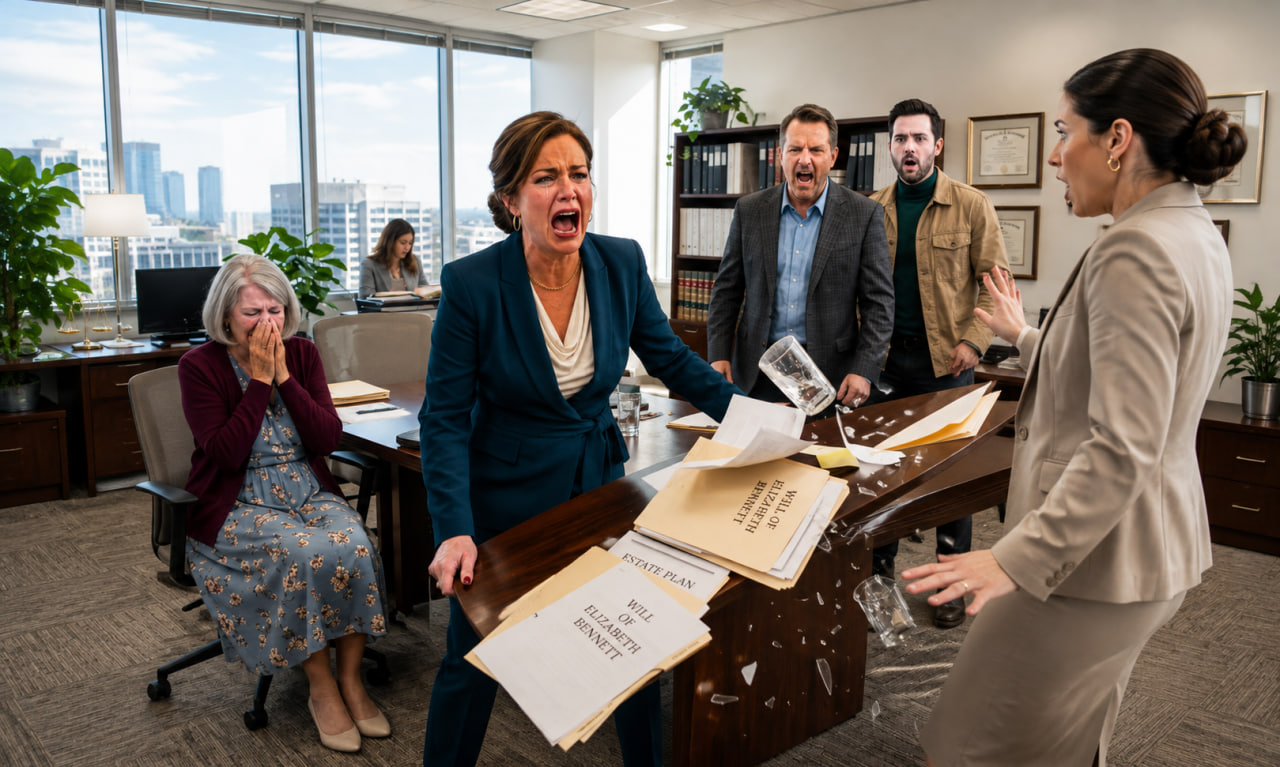
So Rebecca proposed written repayment agreements.
Daniel owed $46,000.
Eric owed $15,000.
Both would repay monthly.
Daniel refused.
At first.
“This is insane,” he said during the meeting. “She gave me that money.”
Mom sat across from him.
Rebecca said nothing.
Neither did I.
Eventually, Mom spoke.
“I gave it because I thought you needed it.”
“I did.”
“And then you told me to leave your house.”
Daniel looked away.
“You knew Melissa—”
“This is not about Melissa.”
It was the strongest I had heard Mom sound in years.
“You brought me to Rachel’s house at night and drove away.”
Daniel’s face reddened.
“I thought Rachel would take you.”
“You didn’t ask Rachel.”
He looked at me.
I stayed silent.
Mom continued.
“You assumed she would do what all of you assume she will do.”
That landed harder than anything I could have said.
Daniel eventually signed.
Eric signed the same day.
But we still had one problem.
Mom needed somewhere to live.
She could stay with me temporarily, but I refused to recreate the arrangement Dad had imagined.
I had a career.
I traveled twice a month.
My house had stairs.
Mom needed growing help with bathing, transportation, and medication management.
Love did not erase those realities.
So Mom and I toured assisted-living communities around Cleveland.
She hated the first.
“It smells like boiled vegetables.”
She rejected the second because the bedrooms were too small.
At the third, she found several women playing cards beside a fireplace.
One looked up.
“You play euchre?”
Mom smiled.
“Better than you probably do.”
The woman laughed.
Mom moved in six weeks later.
Her apartment was small but bright, with a bedroom, kitchenette, accessible bathroom, and courtyard-facing window.
She brought her favorite blue chair.
I brought framed photographs.
Eric’s children helped hang them.
Daniel did not come.
Not at first.
The facility cost more than $5,000 a month, but Mom’s Social Security, pension, and savings could cover it for years.
More importantly, it was her decision.
I visited twice a week.
Eric started coming Sundays with his children.
Daniel stayed away for almost three months.
Then one afternoon, I walked into Mom’s apartment and found him sitting beside her.
He looked thinner.
Mom was folding laundry.
Nobody was arguing.
I almost left.
Daniel saw me.
“Rachel.”
“Daniel.”
Mom glanced between us.
“He came to apologize.”
I set down my purse.
“To you?”
Daniel nodded.
“Mostly.”
“Good.”
He looked irritated.
Then laughed.
It was the first time either of us had laughed around the other since Dad’s funeral.
He had already made two repayments.
Eric had made three.
Things were not fixed.
But they were changing.
Then, seven months after Mom moved into assisted living, another problem appeared.
Tyler called me.
My nephew rarely did.
“Aunt Rachel, can I ask you something?”
“Sure.”
“Did Grandpa leave you anything?”
I paused.
“No.”
“That’s what Dad said.”
“Why?”
Tyler sounded uncomfortable.
“Because I think there’s something weird with the money Grandpa left me.”
My stomach tightened.
“What do you mean?”
Tyler had supposedly received his $200,000 inheritance after probate.
In reality, he received $140,000.
Eric had convinced him to leave $60,000 temporarily in a joint investment account, promising better returns.
The money was gone.
I drove to Eric’s house that evening.
The moment he opened the door, he knew why I was there.
“Tyler called you.”
“Yes.”
He closed his eyes.
“It was a bad investment.”
“You took sixty thousand dollars from your own son?”
“I didn’t take it.”
“You controlled the account.”
“He agreed.”
“He was twenty-three.”
“He’s an adult.”
“So is Mom. That didn’t stop you from taking advantage of her.”
His expression hardened.
“You enjoy this, don’t you?”
“Enjoy what?”
“Being the responsible one. Being the person who gets to judge everybody.”
That stopped me.
Not because he was right.
But because part of it hurt.
For years, I had built my identity around fixing things.
Mom’s appointments.
Dad’s paperwork.
Family holidays.
Medical emergencies.
Now financial disasters.
Even after rejecting Dad’s command, I was still standing in the same role.
Different crisis.
Same expectation.
I looked at Eric.
“I’m not fixing this.”
He blinked.
“What?”
“Tyler is your son. That is his money. You explain what happened, and you work out repayment directly with him.”
“Rachel—”
“No.”
I walked toward my car.
“You don’t get to make me the family collection agency.”
For once, I left someone else’s disaster where it belonged.
Tyler later hired his own attorney.
Eric refinanced his house and repaid most of the money within nine months.
His marriage became strained.
Daniel continued paying Mom back.
My relationship with both brothers remained complicated.
Family photographs never looked quite the same after that year.