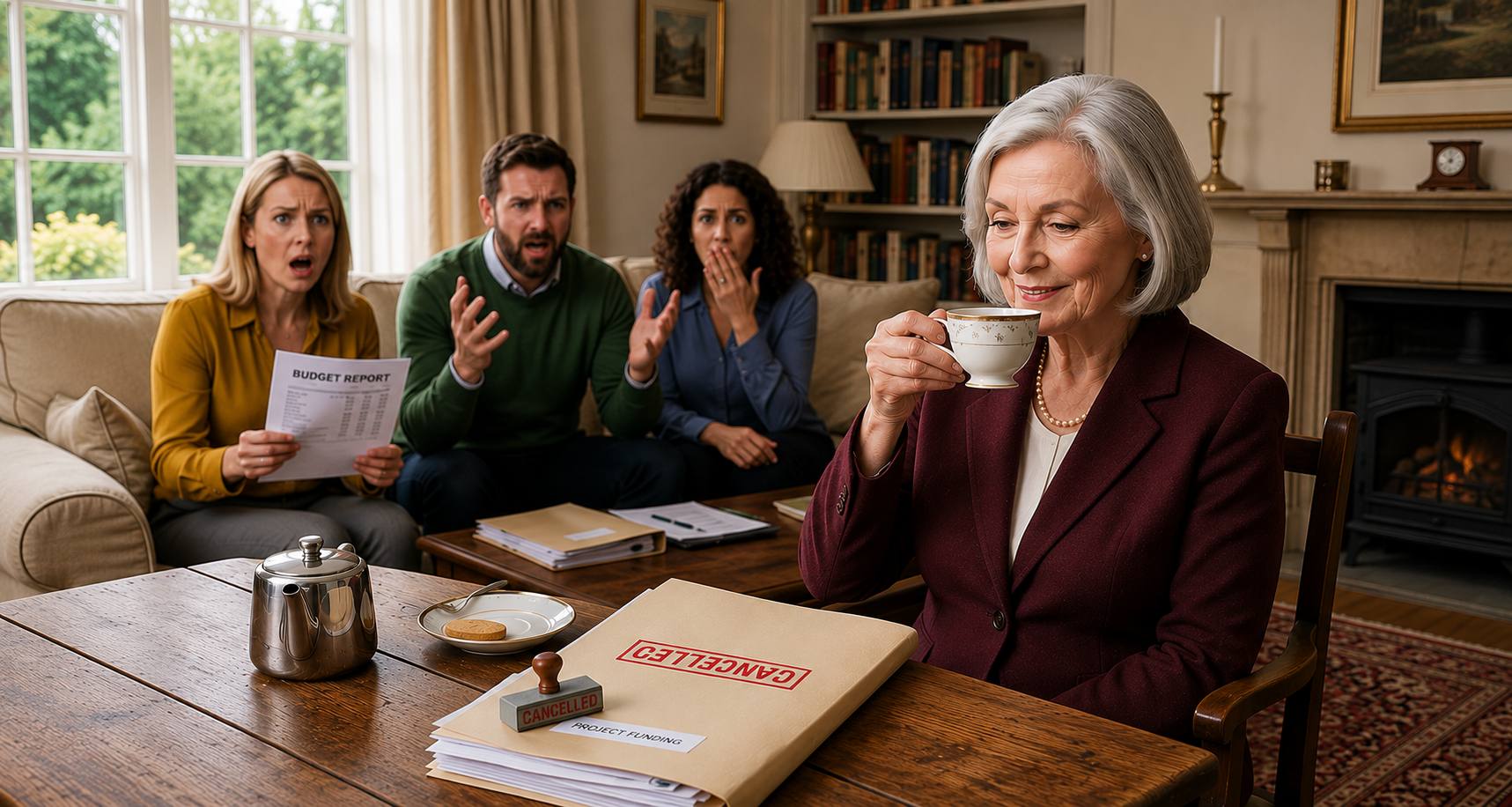
I signed the final form.
That small sound of pen on paper closed a door that had been open for fifteen years.
When I returned home I made tea in the good cup.
Not the chipped one.
The good one.
At 11:26 the first declined charge hit.
Then another.
Then I heard tires on wet gravel in the driveway.
I looked through the curtain.
Serena stepped out first in her cream coat, mouth tight.
Wesley followed, phone in hand, face pale.
The third person made me set down my teacup.
Lydia.
She had come too.
Part 3 — The Driveway
I opened the front door before they knocked.
Serena’s composure was in place but thinner than usual — the specific thinness of a surface that has been maintained for a long time and is now under pressure.
She said: Margaret, there’s been some kind of error with the accounts.
I said: no error.
She said: the mortgage payment didn’t process.
I said: I know.
Wesley said: Mom. We need to talk about this.
I said: yes. We do.
Lydia stood slightly apart from them on the gravel path.
She was not there as my banker.
She was there because I had asked her to come.
I had called her after I returned home from the bank.
I had said: Lydia, I need someone present when I speak with my son. Not as a witness in a legal sense. As a person who knows the numbers and can confirm what I’m saying is accurate.
She had said: I’ll be there.
I said to Wesley and Serena: please come inside.
We sat at the kitchen table.
Arthur’s photograph was still on the mantel.
The folder labeled WESLEY was on the table between us.
I opened it.
Part 4 — The Table
I had not prepared a speech.
I had the folder and the printout Lydia had made of the 174 payments and I had twenty-two years of being Wesley’s mother and fifteen years of being the quiet financial infrastructure of a life he had presented to the world as self-made.
I said: I have been paying your expenses for fifteen years. Last year alone it was $93,600. I have the records here.
Wesley said: Mom, we were going to—
I said: Wesley.
He stopped.
I said: your text said I wasn’t invited. It said your wife didn’t want me there.
I said: I have been paying for the house you had the dinner in. I have been paying for the preschool your daughter attends. I have been paying a business line in my name that I did not open.
I said: I am not angry about the money. I am telling you what the money was so you understand that your wife’s opinion of my presence at your dinner table is not something I was willing to fund any longer.
Serena said: Margaret, this is not the way to—
I said: Serena.
She went quiet.
This was new.
Serena had never gone quiet when I spoke.