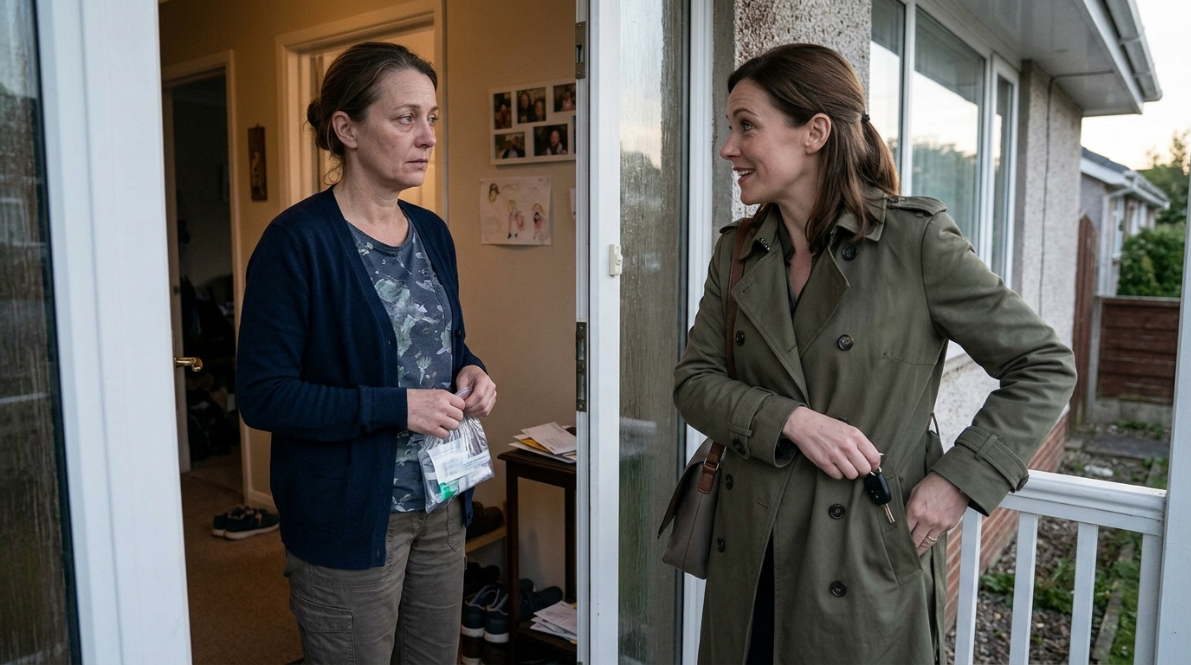
Twenty-three years ago, Gordon left me after 31 years of marriage for another woman. Now he has dementia—and by pure chance, the home-care agency assigned me to his house. His wife opened the door, handed me the medication list, and said, “You’re so patient with him.” She had absolutely no idea she was paying her husband’s first wife $11 an hour to bathe him, feed him, and put him to bed.
For five months, I kept my identity secret. Then I began noticing extra medication in his pill organizer, furniture disappearing from the house, and conservatorship papers sitting on the counter. So I documented everything.
The truth finally exploded during a family meeting when Gordon wandered into the hallway, looked directly at me, and called, “Wanda?”
His wife froze.
Their son slowly stood and whispered, “Mom… that’s Dad’s first wife.”
But discovering who I was became the least of her problems—because five months of my timestamped caregiver notes were already sitting in front of a county investigator.
PART 3
She looked at me as if she were seeing a problem she hadn’t noticed before.
I kept my hands folded in my lap.
Trent sat across from me.
He was forty-six, broad-shouldered, with Gordon’s gray-blue eyes and the same habit of tapping his thumb against his index finger when he was nervous.
His sister, Melissa, sat beside him.
I had met them both only once, briefly, when they came for Christmas last year.
They didn’t know who I was either.
That was fine.
I had spent most of my adult life learning how to be invisible.
Ms. Osei slid another sheet across the table.
“These are the aide’s shift notes from March through August.”
Charlene glanced at the papers.
“I’ve never seen those.”
“They’re agency records.”
“I understand that, but—”
“Then you understand they’re contemporaneous documentation.”
Charlene leaned back.
“I don’t know what you’re implying.”
“I’m not implying anything yet.”
Ms. Osei’s voice was calm.
That calm frightened Charlene more than anger would have.
She opened the folder again.
“On April ninth, the aide documented that Mr. Pryce was unusually difficult to wake and that his pulse was slower than his baseline.”
Charlene looked at me.
“Did you write that?”
“Yes.”
“You never told me.”
“I entered it into the agency system.”
“You should have told me.”
“You were away that evening.”
“I was at work.”
“I know.”
Charlene’s mouth tightened.
Ms. Osei continued.
“On April twenty-third, the aide documented that Mr. Pryce appeared over-sedated.”
“That’s dementia,” Charlene said.
“No.”
The word came from Trent.
Everyone looked at him.
He rubbed his face.
“My dad wasn’t like that when I was here in February.”
Charlene turned toward him.
“Your father has dementia, Trent.”
“I know.”
“He gets worse.”
“I know that too.”
Ms. Osei said, “We’re not here to argue over symptoms. We’re here because a report was made concerning possible financial exploitation, medication irregularities, and neglect.”
Charlene stared at her.
“Financial exploitation?”
“Yes.”
“By whom?”
Ms. Osei looked down at the folder.
“The report is confidential.”
“Then how am I supposed to defend myself?”
“You’ll have an opportunity to respond.”
Charlene laughed once.
It wasn’t a happy laugh.
“This is unbelievable.”
I said nothing.
Trent looked at me.
Then Melissa did.
Their eyes stayed on my face.
Something passed between them.
Recognition.
Not of me.
Of something else.
They were trying to figure out why this quiet aide seemed so unsurprised.
Then Gordon called from the hallway.
“Wanda?”
My heart stopped.
Charlene froze.
Trent stood.
“Who is Wanda?”
I looked toward the hallway.
Gordon was standing there in his pajama shirt, one hand gripping the doorframe.
He looked frightened.
I got up.
“I’m here.”
He stared at me.
Then he smiled.
It was the first real smile I’d seen from him in months.
“Where’d you go?”
“I was right here.”
“You left.”
“No.”
He shook his head.
“You always leave.”
Something inside my chest cracked open.
I walked toward him.
He reached for my hand.
I took it.
His fingers were cold.
“Come sit down,” I said.
He let me lead him to the recliner.
Behind me, I heard Charlene whisper, “Wanda?”
I closed my eyes for half a second.
Then I turned around.
“Yes.”
Charlene looked at me.
“Your name is Wanda?”
“Yes.”
She stared.
“What’s your last name?”
I didn’t answer immediately.
Trent stood up slowly.
His face had gone pale.
He looked at his mother.
Then at me.
Then back at his mother.
“Mom.”
Charlene didn’t move.
“What’s wrong?” she asked.
Trent’s voice was barely above a whisper.
“That’s Dad’s first wife.”
Nobody spoke.
Gordon looked up from his chair.
He pointed at me.
“My wife.”
Charlene’s face went completely white.
For five months she had been paying eleven dollars an hour to the woman she believed was a stranger.
For five months I had been bathing the man she stole from me.
And now, for the first time, she understood exactly who had been standing in her house three nights a week.
But she still didn’t know the worst part.
Because I hadn’t come there for revenge.
I had come because I wanted to know whether the man who had once promised to grow old with me was being cared for.
And now I was beginning to suspect that someone was trying to make sure he didn’t live long enough to decide what happened to his life.
The meeting ended without anyone making a decision.
Ms. Osei told Charlene she was placing an emergency review on the conservatorship petition.
She also instructed the family not to sell, transfer, mortgage, or remove major assets from the property until the county completed its investigation.
Charlene argued.
Ms. Osei didn’t raise her voice.
She didn’t have to.
When a person has authority, they don’t need to sound angry.
They just need to say what happens next.
After she left, Melissa went into the kitchen.
Trent stayed beside Gordon.
I was putting away his breakfast dishes when he came up behind me.
“Mrs. Pryce?”
I turned.
He looked embarrassed.
“I’m sorry.”
“For what?”
“For not knowing you.”
I dried my hands.
“You were nine when your father and I divorced.”
“I know.”
“Children don’t owe their parents’ ex-spouses anything.”
“But you knew who I was.”
“Of course I did.”
He looked toward Gordon.
“Did he talk about you?”
I almost laughed.
“Not much.”
“Why?”
“Because your father wasn’t very good at talking about the things that made him uncomfortable.”
Trent looked down.
“That’s true.”
He was quiet for a moment.
Then he asked, “Why are you here?”
I knew what he meant.
Why did I take the assignment?
Why did I stay?
Why did I wash the body of the man who had broken my heart?
Why did I make soup for someone who had once told me he was tired of being married to me?
I could have given him a hundred answers.
Instead, I gave him the truth.
“Because somebody needed to.”
He swallowed.
“Did you hate him?”
I looked at Gordon.
He was asleep.
“No.”
“Even after what he did?”
“I hated what he did.”
“That’s different?”
“Very.”
He nodded slowly.
Then he said something that surprised me.
“Mom says Dad was miserable with you.”
I looked at him.
“Did she?”
“Yes.”
“And did your father say that?”
Trent hesitated.
“No.”
I waited.
“He used to say you were the best thing that ever happened to him.”
My throat tightened.
“Did he?”
“Before he got sick.”
I looked away.
Some memories should remain buried.
Not because they aren’t important.
Because they are.
That night, after everyone left, Gordon woke up around nine.
I was sitting beside his bed reading.
He looked at me for a long time.
Then he said, “I know you.”
I closed the book.
“I know.”
“You used to sing.”
“I still do sometimes.”
“You sang when you cooked.”
“I did.”
“You hated onions.”
“I still hate onions.”
He smiled.
Then his expression changed.
“Wanda.”
“Yes?”
“I’m sorry.”
I stopped breathing.
He looked toward the ceiling.
“I’m sorry.”
“For what?”
His eyes filled with tears.
“I don’t remember.”
That sentence hurt more than if he had remembered everything.
I took his hand.
“You don’t have to.”
“I hurt you.”
I looked at him.
“Yes.”
“I chose wrong.”
I didn’t answer.
“I thought I was choosing happiness.”
His voice shook.
“Wasn’t?”
“No.”
He closed his eyes.
“I lost you.”
“Yes.”
“I thought I’d find you again.”
“You didn’t.”
“I looked.”
That surprised me.
“What?”
“I looked.”
He opened his eyes.
“After you left.”
I stared at him.
“How?”
“I don’t know.”
His breathing became uneven.
“I went to the old house.”
“You sold it.”
“I know.”
“I moved.”
“I know.”
“How could you know?”
He frowned.
“I don’t remember.”
Then he fell asleep.
I sat there for a long time.
I didn’t know whether the memory was real.
With dementia, memories don’t always arrive in order.
Sometimes the past is clearer than yesterday.
Sometimes a person’s mind takes a road that no longer exists.
But something about the way he said it stayed with me.
I looked at the closet.
At the shoebox.
At the photograph.
And for the first time, I wondered what else was inside.
The next morning, Trent called me.
“Can you come to my hotel?”
I almost said no.
Then he added, “I found something.”
So I went.
He was sitting at a small table near the window.
There were papers spread everywhere.
“What’s this?”
He pushed a folder toward me.
“I found it in Dad’s safe.”
I opened it.
Inside were bank statements.
Property documents.
Insurance records.
And one handwritten letter.
I recognized Gordon’s handwriting immediately.
The letter was dated 2004.
A year after our divorce.
I read it once.
Then again.
It said:
Wanda,
I don’t know if you’ll ever read this.
I hope you don’t.
Because if you do, it means I failed at saying it to your face.
I was a coward.
I wanted something new because I was afraid of getting old.
You were there every day, and instead of being grateful, I convinced myself that ordinary meant unhappy.
Charlene makes me feel young.
But I don’t think she makes me feel loved.
I think I mistook being wanted for being loved.
I don’t know how to undo what I’ve done.
I don’t expect forgiveness.
I only want you to know that the fault was mine.
Not yours.
I folded the letter.
Trent watched me.
“He kept it for twenty-two years.”
“Apparently.”
“There are more.”
He pulled out another envelope.
This one was addressed to me.
My hands started shaking.
“Why didn’t he send them?”
“I don’t know.”
Then Trent looked at me.
“There’s something else.”
“What?”
“Mom knew about the money.”
“What money?”
“The money Dad put aside.”
I looked at him.
“What money?”
Trent opened another statement.
“Before the divorce, Dad had an investment account.”
“I knew about that.”
“He transferred it after the divorce.”
“To Charlene?”
“No.”
He looked at me.
“To you.”
I stared at him.
“What?”
“Not directly. Into a trust.”
My mouth went dry.
“Why?”
“Because he was afraid Charlene would find out.”
I shook my head.
“This doesn’t make sense.”
“There’s more.”
He slid a legal document across the table.
I read it.
My name was there.
My full legal name.
And beside it was a date.
Then another date.
The document had been updated last year.
“Who updated this?”
“Dad.”
I looked at Trent.
“Your father couldn’t have updated a legal trust last year if he already had advanced dementia.”
“That’s why I’m calling an attorney.”
I stared at the papers.
Then I understood.
The conservatorship wasn’t just about selling the house.
Charlene wasn’t trying to control a helpless old man.
She was trying to control something he had spent twenty-two years protecting.
Something he had apparently intended to return to me.
And suddenly, the eleven dollars an hour didn’t seem like the strangest part of the story anymore.
That afternoon, I went back to the house.
Charlene was waiting.
She was standing in the kitchen with her arms folded.
“You need to leave.”
I put my purse down.
“No.”
Her eyebrows lifted.
“You work for the agency.”
“I do.”
“I’ll call them.”
“You already did.”
She looked startled.
“They’re aware of the situation.”
“This is my house.”
“No.”
She stepped toward me.
“Excuse me?”
“You live here.”
“It’s my home.”
“It’s Gordon’s home.”
“He’s my husband.”
“Yes.”
“And you’re his ex-wife.”
“Yes.”
She laughed bitterly.
“Do you think this is some kind of victory?”